
Refinery Oil Movements and Storage Systems Implementation

The Problem

A typical refinery or any liquid based manufacturing plant has billions of dollars’ worth liquid assets (crude oil , manufactured intermediate and final products) in 150-300+ storage tanks. The inventory of these assets are monitored in real-time and moved within and across refinery boundaries in 100+ movements on daily basis. The management of these assets is crucial not only from safety (spillage, explosion, equipment burn-outs) point of view but also for reconciliation of receipts and dispatches to avoid discrepancies and thereby avoid huge losses of revenue or overpaid for less than ordered delivered products.

Challenges

OMS was retained as Subject Matter Expert (SME) and Lead Engineer cum Project Manager (LE/PM) to manage the implementation of Invensys (now Schneider) Tanks Information System (TIS) and Oil Movement Management (OMM) system for 6 shell refineries in the USA and recommission TIS/OMM at one of the European refinery where the system was decommissioned earlier year ago after 3-4 months’ in use due to lack of support from the vendor and functionalities for the refinery’s specific needs. The project duration was 3+ years to implement afresh and recommission TIS/OMM at 7 shell refineries and involved coordination project shell IT team of 5+ people, vendor engineers and analysts and complementing staff from each refinery.

Project Objectives

The main objective of the project was to implement and commission the refinery’s liquid assets system which comprised of Tanks Information Systems (TIS) and Oil Movement Management (OMM) from the vendor Invensys (now Schneider) for 6 US Shell Refineries (Deer Park, Port Arthur, Convent, Norco, Martinez and Puget Sound). The project also had the scope to recommission TIS/OMM systems at Shell’s of European refinery at Fredericia (Denmark) which was earlier abolished by the refinery after its in service of only 3 months due to lack of functionalities and adequate training.

The scope of the project included the following objectives:

  1. Over-all integration of the following sub-systems provided by third party vendors.
  2. Tank Information System (TIS) – Vendor Invensys https://www.schneider-electric.com
  3. Oil Movement Management (OMM) – Vendor Invensys
  4. PHD/PI Database – Vendors Honeywell and OSISoft www.osi.com
  5. Oil Logistics, Accounting and Shipping Management (OAS) – Vendor www.MaronSystem.co.uk
  6. Mass Reconciliation System (Advisor) – Vendor-Aspentech www.aspentech.com
  7. Optional – Orion/MBO for some sites
  8. Blend Optimization and Scheduling System (BOSS) – Vendor Invensys at some sites
  9. Laboratory Information System (LIMS)
  10. In-house developed terminal entry systems
  11. Global SAP as Shell Enterprise Resource Planning System (ERP) as Book of Record
  12. Data Reconciliation for unit Balancing (DataRec) – Shell
  13. Various data transfer interfaces using BizTalk, sFTP Protocols
  14. DCS from Honeywell, Invensys (TDC-3000, DeltaV)

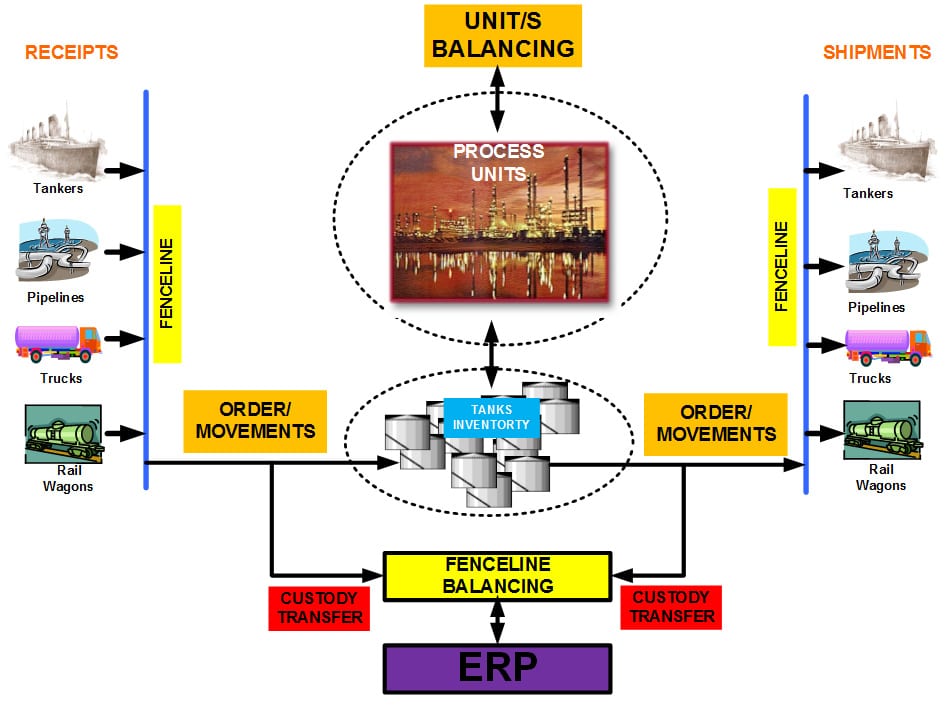
Figure-1 Shows the representative flow of information between above-mentioned system modules in an integrated system implemented at Shell under the scope of this project.
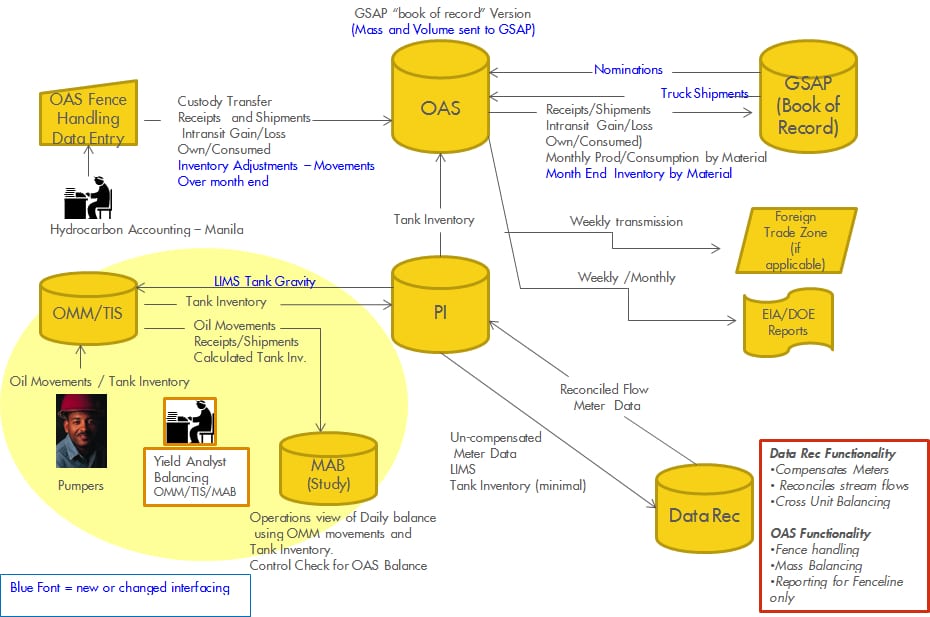
Information Flow diagram of Refinery liquid Assets Management System

Figure-1 Information Flow diagram of Refinery liquid Assets Management System

  1. Evaluation of Material Balance (MAB) software from Invensys for the fence-line balancing to supplement or replace Aspentech’s Advisor software. Please click here to view the project profile on this project task. This task was managed as a sub-project of the global project discussed in this project profile.
  2. Develop and implement a comprehensive program and schedule to train refinery operators and engineers working in the refinery offsite operations.
  3. Develop and implement a operator certification strategy to certify/re-certify operators for continuing education and the completion certificates would become a part of their employment file.
  4. Develop and implement a blended eLearning system for continuous training of new and old operators and engineers alike to efficiently manage the refinery assets management systems implemented under this project.
  5. Streamline the information flow among all system sub-modules and work flow between planner/scheduler, oil movement operator and yield accountant.

Our Approach

The project was divided into many sub-projects handled by many project teams due to its vast implementation scope (7 shell refineries), budget (5M$+) and duration (4 years).   OMS followed the following approach for various aspects of the project.

  1. Project Management – OMS used the following Project Deliverables Framework (PDF) to manage and provide SME services for the initial implementation of OMM/TIS at 6 US refineries and recommissioning of OMM/TIS at Fredericia refinery.
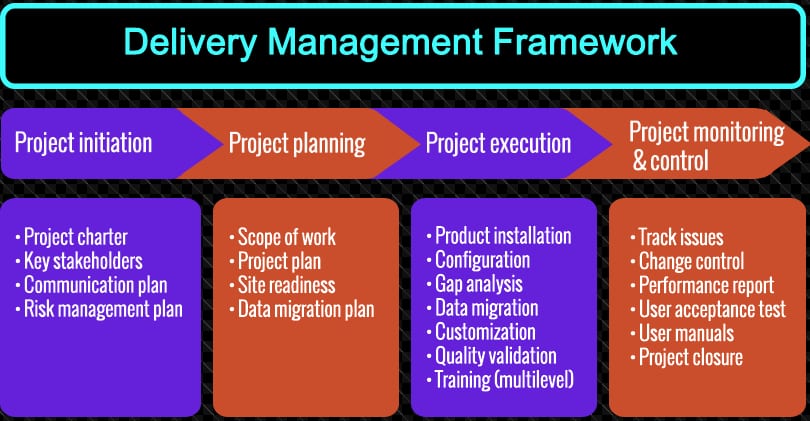
oil movement management omm and Project Delivery Framework

2. Development of Training Strategy – OMS developed a strategy to train OMM/TIS operators, planner/scheduler and yield accountant as two steps approach; to train trainers and train users to enable post project in-house user supports from supervisors and experts before soliciting help from the software vendors. This included 3 weeks class-room training sessions with after course certifications. A post training survey shown below indicated that the training/re-training was received well by the attendees.
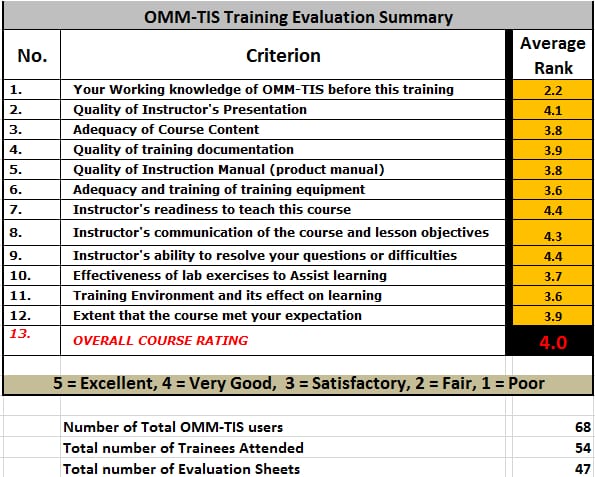
OMM-TIS Training Survey

3. Development and Commissioning of Blended eLearning System for OMM/TIS – The corporate management was concerned that OMM/TIS operator have high attrition and rotation rates and will require continuing education option to train on the job and certify/recertify them for the job responsibility. Keeping this mind, a sub-project was funded and initiated t develop blended eLearning system for the purpose and entrusted OMS for project management and SME services. This project was 8 months duration with funding of 150K$ and comprised of 20 teams members from both onshore and offshore organizations.
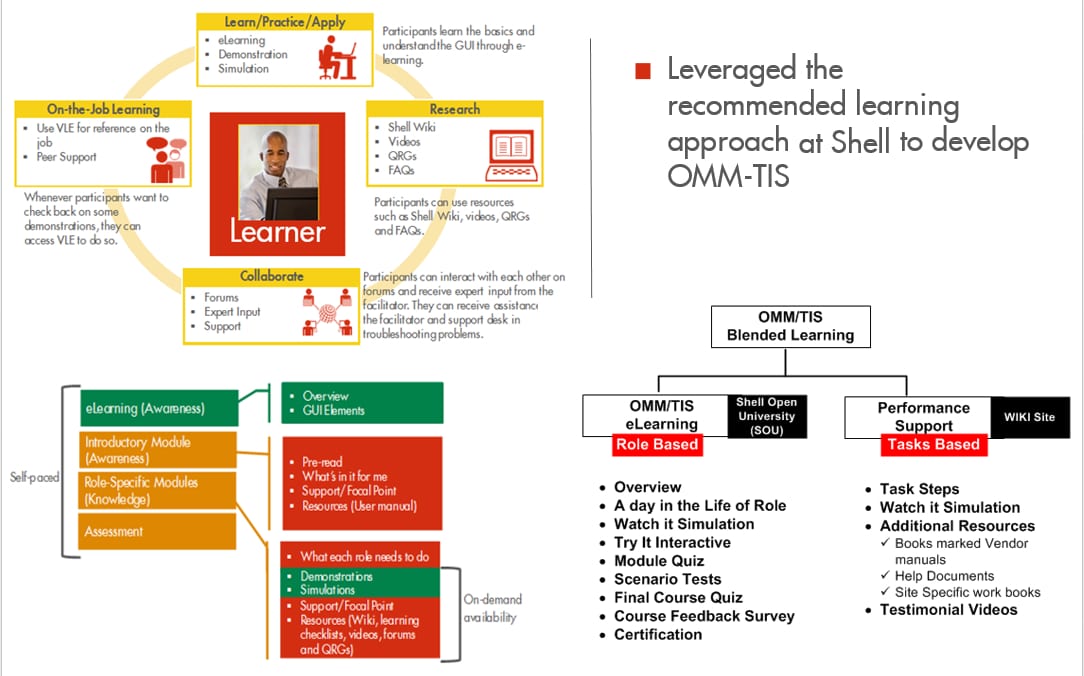
Development and Commissioning of Blended eLearning System for OMM/TIS

 4. Evaluation Study of MAB (Material Balance) – This sub-project was managed and executed by OMS to explore if Invensys MAB can be used for fence-line balancing and supplement the functionalities of Aspentech’ s Advisor software. OMS’ approach was to study mass balancing work flow and activities at two Shell refineries (Norco and Fredericia) to enlist the requirements and evaluate MAB against those requirements.
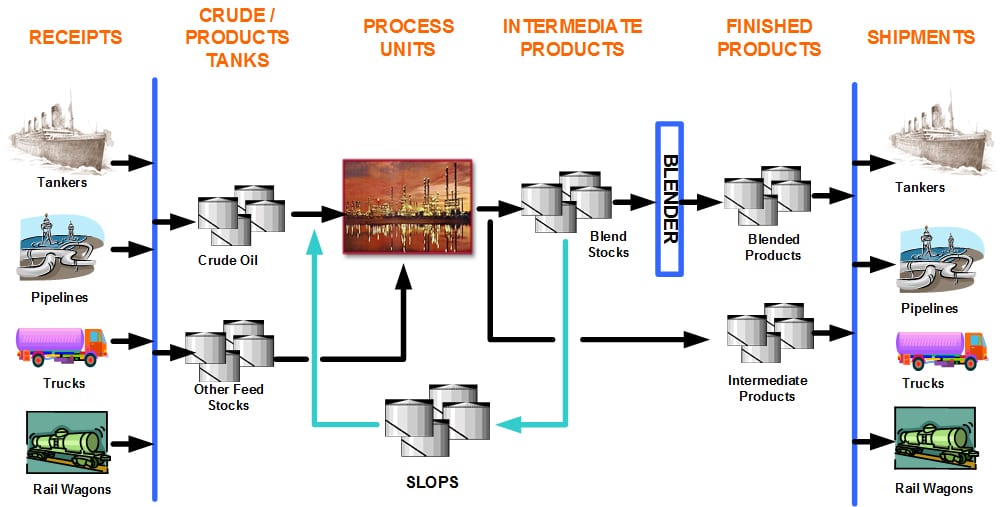
Refinery-Tanks-Farm

The End Result

  • Oil movements and storage (OMM/TIS) systems were installed, commissioned and operational at seven of the shell US/Non-USA refineries.       The success of the project was measured in terms of daily movements managed using OMM/TIS as KPI (Key Performance Indicator) for all seven refineries over 3-6 months period and categorized for different types of movement.
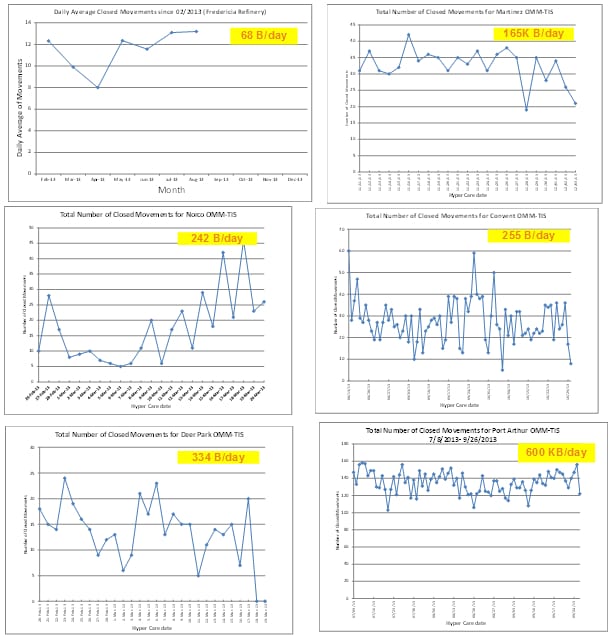
OMS-TIS Training Evluation Survey

  • It is observed that number of average daily movements are related to pre-expansion crude capacity. However, if the refinery capacity is expanded, then the number of required movements are higher as there may not be adequate tankage for the expanded capacity as seen below for a refinery expanded from 300 to 600 KB/day capacity.
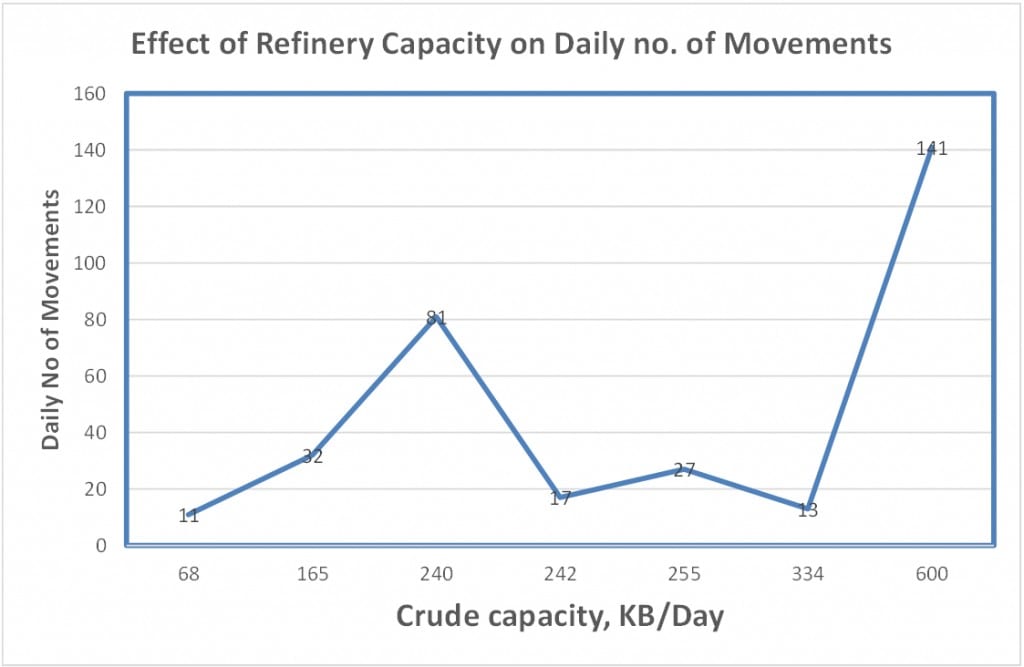
OMM Vs Crude Capacity

  • The profile of sub-project “Evaluation Study of a Refinery Mass Reconciliation Software” can be viewed by clicking here.
  • The profile of sub-project “Blended eLearning Portal for Refinery Assets Management Systems” can be viewed by clicking here.

More Information

For additional material on the concepts inherent in the project described here, you can view the following OMS webinars. Click here to view these webinars.

  1. The Management and Automation of OM&S in a Refinery
  2. Tank farm Management
  3. Hydrocarbon Management in the Refining Industry
Refinery Liquid Asset Management Systems elearning portal

The Problem

The refinery liquid assets management systems, namely, TIS (Tanks Information System) and OMM (Oil Movement Management) were deployed at 10 US/Non-US refineries of an oil corporation. As part of this deployment, 60+ users were trained in 2 days fast paced class-room theoretical and practical training. It was noted that

  • After class room training, user while on the job gets additional help from supervisor, super user and/or by referring to printed manuals and guides.
  • There was no provision for refresher training for the already trained operator or for any transfers or new joiners.

Hence, a need was recognized to develop a blended eLearning Portal that will provide ‘just in time’ OMM-TIS online training for the sites refinery operators, planners and yield accountants.

Challenges

The development of eLearning portal had a very ambitious plan, to make it very comprehensive, detailed, audio enabled, interactive, with all reference and additional help available online, be suitable for on the job certification and should cover all roles of refinery planner, operator and yield accountant.   For this purpose 5 projects teams of onshore/offshore design and developers were organized with 35+ team members. The challenge was to find a Subject Matter Expert (SME) who had the expertise and experience in OMM-TIS and could work across all teams and stakeholders. The corporate management concluded that our company fitted all qualifications to lead the project as SME and Project Manager with a time-line of 8-9 months.

Project Objectives

The project objectives were defined as follows:

  • Since the eLearning Portal was specific to the Assets Management Systems (OMM-TIS), it must be both Role based (Planner, operator, Yield accountant) and Task Based (Material movement from various sources to various destinations).
  • A WIKI site to offer performance support in terms of manuals, context sensitive help, video, user forums
  • Must have Role Overview, A day in the life of Role, Watch it Simulation, Try it Interactive, Quiz, Scenario tests and final course quiz for certification

Our Approach

Usually, the blended learning project uses “Water-fall” methodology for the project management, however decided to use hybrid of water-fall and agile methodologies due to complexity of the project. The project work was divided into two project teams, one for eLearning and other one for WIKI Share-point performance support. Each of these teams were US based with development support from offshore teams and they worked independently. The common link between these two projects and all stakeholders was our company to provide over-all project management, Subject matter Expertise, all reviews and approvals and budget and schedule management. The user community consisted of one lead control engineer from each of six US refineries.

The project methodologies included initial design using storyboard, capturing screen images from the software, developing interactions to it, adding audio-video with captioning, quizzes and final course certifications.

The End Result

The blended eLearning Portal was developed, delivered and accepted by the client management and user community alike. The project evolved an unique method of review and acceptance matrix by our company which streamlined the development and feedback process with full documentation of every step.

Other Related Information

If you would like to read more on the other options of continuing education for the management, control, optimization and reconciliation of the refinery offsite operations, please click here


Hydrocarbon Management and Oil Gas Automation

The Problem

Shell oil had initiated software projects to implement assets management systems (Tanks Information System and oil movement management ) from automation vendor Invensys and ERP system (OAS) to integrate into a complete Hydrocarbon Management System (HM). However, the corporation felt that there should be another cross-check for fence-line balancing in this integrated system as fence-line balancing was affecting the bottom-line due to mismatches in orders and executions. MAB (Mass Accounting Balance) from the same vendor Invensys was chosen to evaluate its suitability to fit the requirement of fence-line balancing as an integral part of the Hydrocarbon Management (HM) in 10 of Shell US and Non-US refineries.

Challenges

MAB (Material Balance) is a module from Invensys for the mass reconciliation purpose. It is seamlessly integrated with OMM-TIS using the same off-site database. However, the software MAB from the vendor was primarily developed for the truck terminals and was not deployed by Invensys for general mass reconciliation in a refinery. The foremost challenge was to evaluate the software and enlist enhancements that are needed by the vendor to make it suitable to use as integrated tool for the general mass reconciliation and not just fence-line balancing.

Project Objectives

The project objectives were divided into the following categories:

  1. Evaluate and enlist the deficiencies MAB from Invensys to fit as general Refinery Mass Balancing tool to integrate with Invensys’ OMM and TIS modules
  2. Use two of shell refineries, US and Non-US based, to demonstrate proof-of-concepts to use MAB integrated with OMM/TIS at these refineries
  3. Make a business case of implementing MAB for 10 of Shell refineries where OMM/TIS were already implemented

Our Approach

We used Stage Gates (SG1 and SG2) shell’s Project Delivery Framework (PDF) for the MAB study to approach the project as follows:

  1. Install Invensys’ OMM/TIS and MAB in Virtual Machine (VMware) environment to install live system from two of Shell’s US and Non-US refineries to evaluate MAB integrated with OMM/TIS
  2. Test and evaluate all functionalities of MAB with actual reconciliation in MAB and compare it with refineries’ reconciliations using another vendor ASPEN’s reconciliation software namely Advisor
  3. Identified and enlisted enhancements required in MAB by the vendor
  4. Analyzed refineries’ monthly reconciliation data and determined they were either erroneous or out of industry average oil loss
  5. Made a business case to implement enhanced MAB in 10 of the Shell Refineries

The End Result

The MAB evaluation study concluded the followings:

  • Current HM landscape uses Advisor to do mass reconciliation and cross-check fence-line movements with SHARE/SAP in the form of a comparative SAP report (Advisor versus SAP values).
  • This functionality will not be available long term, thus leaving a business gap for doing daily/monthly mass reconciliation and generating a comparative report.
  • Evaluation of historical monthly mass reconciliation data for two refineries showed that
    • % loss/gain were not within industry average
    • Variation in monthly % loss/gain was not normal
    • % loss/gain in mass was positive for many months and it is not normal as there can never a positive gain in mass and negative gain in volume. This affects the financial results.
  • Accurate and more timely (daily or weekly versus monthly) reconciliation would minimize above discrepancies and increase quality and accuracy of mass /volume reconciliation
  • MAB would facilitate a single point for reconciliation activities showing all possible imbalanced movements as compared to current practice of reconciling individual movements in OMM-TIS without a view of over-all balance.
  • Possible tangible benefits will be due to
    • Improved % loss/gain – estimated benefits 1M$-8M$/year/refinery
    • Improved efficiency in mass reconciliation efforts
    • Improved quality and accuracy of %loss/gain and financial results

Other Related Information

If you would like to learn more on Hydrocarbon Management (HM) in a refinery,  please click here for OMS webinar.

Estimation of the unmeasured flows from the gas wells

The Problem

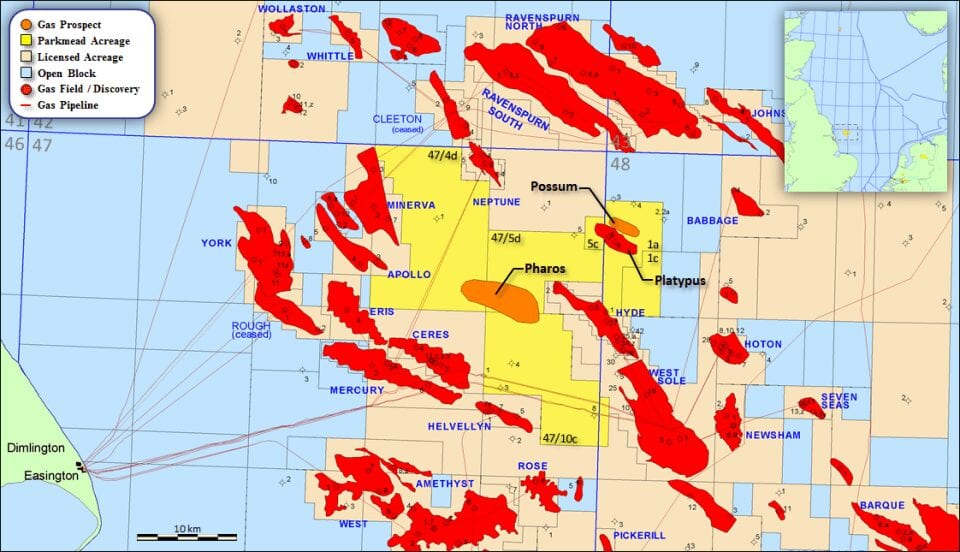
Typically a sub-sea gas reservoir can consists of many developed gas fields with many clusters of gas wells. The numbers of gas wells modeled and analyzed in this project varied from 80-135 as shown below in figures.

Reservoir Location no of gas fields No of well Clusters Total no. of wells
West Philippines 5 26 128
Northern North sea 12 25 89
Southern North sea 5 26 134

Each of above wells is owned by various parties and the revenue from it is nominated to its owners based on the gas produced from each well. It is also desired to optimize the gas production from each well by shutting each well in a cyclic fashion to build the producing pressure by diffusing gas from reservoir beds to the wells.

Challenges

The major challenges from the gas fields and its nominations were:

  1. All gas wells do not have flow meters as they are very expensive to install, installed ones may not function all the time and may not be calibrated correctly.
  2. To account for sub-zero sub-sea temperatures on the gas flow estimations
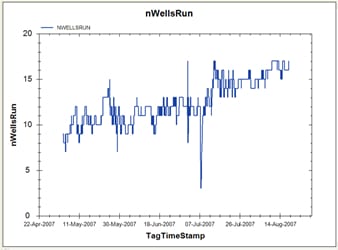
  3. It is desired to predict the gas well shut-in and operate cycle as the gas pressure decreases over time as gas gets depleted until the pressure builds up again. Typically, the total numbers of wells in operations can vary from 3 to 16 at any time as shown below.

Representative Wells operating Cycles

Figure 2 Representative Wells operating Cycles

Project Objectives

  1. To design and develop a standardized data depository system using SQL server databases to hold all vast amount of field data from various projects and be able to retrieve a sub-set of this data for any analysis (currently data is stored in non-standardized Excel and MS access databases).
  2. To develop a generalized graphical system to visualize and analyze all well variable, analysis results to view on screen and print in PDF and printed formats
  3. To develop a system by which flow can be estimated from gas wells with no installed meters by using the total flow measured both at individual cluster headers and at the separator level.
  4. To be able to predict the total gas flow at the separator and compare it with the measured within ±5% error.
  5. The developed system should be able to optimize the well tuning model constants so they can be updated and used in simulation of gas production from the gas reservoir
  6. To be able to predict the well shut-in and operate cycles to optimize the gas productions

Our Approach

  1. Use ETL (Extract-Transform-Load) method to consolidate all field data to prepare for the flow estimation purpose
  2. Use the following models to predict the flow from the wells and reservoir. (Details of mathematical formulations of these models are outside scope of this document).
    1. Choke Model
    2. Reservoir Model
    3. Temperature Model
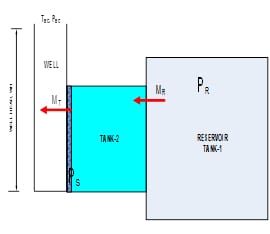
    4. Two tanks Model
    5. Composite Model (models 1,2,3)
    6. Global Optimizer
  3. Use third party non-linear regression tools
  4. Optimize the Model parameters and minimize the regression residual error

The End Results

  1. Designed and developed gas field wells data to consolidate into SQL databases to standardize ETL process from Binary data transmitted from field to mapped data in SQL databases. The work involved database design, development of VBA/Vb.net modules, variable mapping strategy, data validation, and consistency checks etc. The size of databases involved storing of 2000+ variables and 500,000+ (one year) data records for each reservoir.
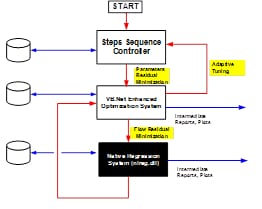
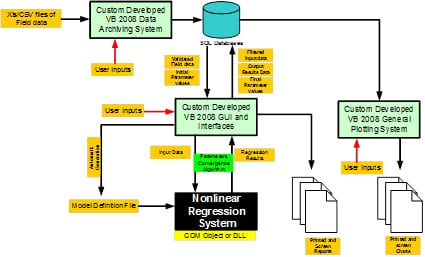
  2. Designed and developed a non-linear regression integrated module by using a third party com/DLL library and interfaced with SQL databases in custom developed vb.net modules. This system used all relevant models in alone and combined modes to predict the gas flow from wells as well as total flow.

Illustrative 2 tanks model analyzed Architecture to deploy non-linear regression

Figure 3 Illustrative 2 tanks model analyzed                           Figure 4 Architecture to deploy non-linear regression

  1. Designed, developed and commissioned integrated system from data depository (ETL), performed non-linear multi-variable regression system to tune and optimize the final gas flow models parameters

Final Integrated Wells Flow regression System

Figure 5 Final Integrated Wells Flow regression System

  1. Sample of final results

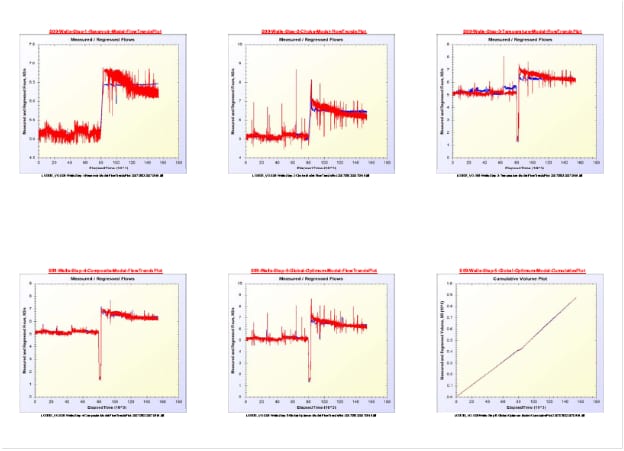
The success of regression was to be able to predict gas flows from individual gas wells (measured or unmeasured) and total gas flows at cluster nodes and top-side measurement.  This was necessary for correct nomination of revenues to the wells’ individual owners.

Predicted vs measured flow for each well in cluster as well as total flow

Figure 6 Predicted vs measured flow for each well in cluster as well as total flow

Your refinery operations deserve smarter automation

From tank farm control to hydrocarbon loss reduction, Global OMS delivers digital solutions trusted by refineries worldwide.