
Non-linear Offline Blend Optimizer

Test

Background

The planning of refinery blend products and the subsequent optimal control of the blending process has a significant immediate impact on refinery profitability and excess inventory. gomsPOFBlend™ off-line blending planning package considers production planning, inventory management, and the quality and value of blending components to optimize blending operations. It is a comprehensive package, which can be modularly integrated in a refinery’s MES structure.

Applications

Offline Product blending optimization, planning and scheduling system (gomsPOFBlend™) can be used very effectively for:

  • Single recipe generation for Gasoline, Diesel and Fuel oil products
  • Multi-period blend planning for weekly inventory control and monthly production forecast
  • Conducting blend studies for operational change modeling and LP verification
  • Reblending to correct off-spec blends
  • Backcasting to calculate blend models parameters and bias terms
  • Analysis of compliance with EPA, CARB rules
  • Blend Recipe Management and Automatic downloading of next blends recipes to online execution

Benefits

  • Shift usage of more economical components
  • Determine and exploit on-the-spot opportunities quickly
  • Link refinery-wide planning to short term logistics
  • Remove guesswork and artistry from blend planning
  • Production of economically optimum product blends, thereby adding to refinery’s bottom line profitability
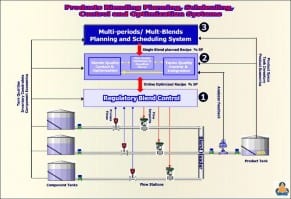
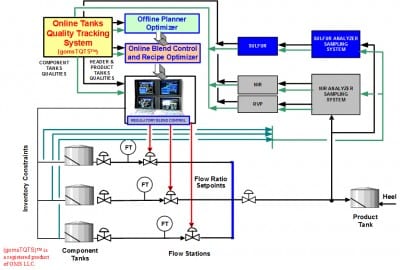
OMSCBlend-Bro-Fig-3Figure – 1 OMS Blend Control, Optimization and Planning System Hierarchy

Features

  • Basic
    • Blending full range of gasoline grades, aviation jet to diesel fuel for distillate blends, and fuel oil blends.
    • Multi-period planning with inventory control constraints.
    • Number of multiple periods, feed-stock components, and product grades limited only by computer memory size availability.
    • Can choose non-linear predictive methods “on the fly” for qualities
    • Maximize profit, Minimize quality giveaway, Calculation only optimization Choices
    • Determine the header targets for properties for an online system
  • Advanced
    • Inventory Management – account for changing production and set time dependent limits
    • Group Specifications – property constraints over groups of blends
    • Heel Tracking – accounting for volume / qualities in tank already, for each use Component
    • Pooling – simulate rundowns
    • Generalized free-formatted linear and non-linear equations generation and management system (GAMS™)
    • User Selectable options for multiple Correlations for 36 qualities
    • 3 User definable blend qualities
  • Extended
    • Octane Blending Values – determine indices for use in LP’s
    • Blend Property Control Interfaces- send recipes directly to on-line system
    • Biases – add values to correct consistent errors
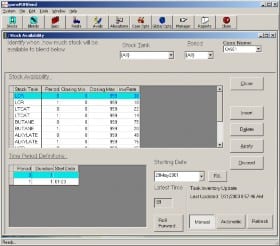
omsPOFBlend-Fig-2Figure – 2 Stock Availability Data Entry

    • Giveaway Ranges – ensure blend remains close to specification
    • Infeasibility Control – recover from “impossible” situations, relax constraints until solution is found
    • “Distress” Buy / Sell – provides indication of why problem won’t solve, calculate volume / quality needed to make an infeasible problem solve
  • Environmental
    • EPA RFG Models – blend to emission specifications, ignores extrapolations at iteration-level (may impact), report exactly as written
    • CARB Phase II Predictive Model – report emissions, report acceptability
  • Modeling and Correlations
    • Preferred Recipe Penalties – encourages model to stay near a preferred Starting recipe
    • Product Group Limits – volume constraints over groups of blends
    • Product Group Relations – relate production of blends to each other
    • User selectable built-in well proven correlations for over 40 properties for gasoline, diesel and fuel including EPA RGF and CARB models
    • Optimal scheduling of multi-period blends
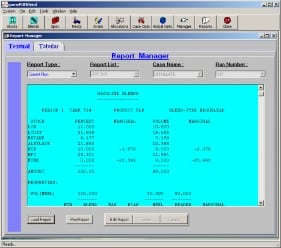
omsPOFBlend-Fig-3Figure – 3 Reports Manager

Interfaces

gomsPOFBlend™ allows direct interface with

  • Regulatory and Online blend control and optimization system (gomsPONBlend™)
  • Laboratory and Tank gauging data
  • gomsTQTS™ for online tank quality tracking system.
  • Blend Information Management System for feedback of model biases (gomsBIMS™)

Economics

Economically, it is estimated an annual savings of 750K–1.5MUS$ by Offline Recipe Optimization, and planning and Scheduling of blends.

System Requirements

Intel Core i7 or equivalent, 3+ GHz, 32GB RAM, 1TB+ HDD, CD ROM, 17”+ color monitor, Windows 7 and higher OS

Contact Information

Offsite Management Systems LLC
2003 Baker Estates Dr. Houston, Texas 77094, USA
Tel: +1-832-821-8001 Fax: 866-450-4035
Email: info@globaloms.com Web: www.globaloms.com

Copyright 2000-2015 Offsite Management Systems LLC. All rights reserved. OMS™, OMS logo (Tri-circle Triangle), ”…Redefining Excellence”, gomsTIMS™, gomsTQTS™, gomsPONBlend™, gomsPOFBlend™, gomsBIMS are trademarks of Offsite Management Systems LLC, USA.
Regulatory Blend Control and Optimisation System

Background

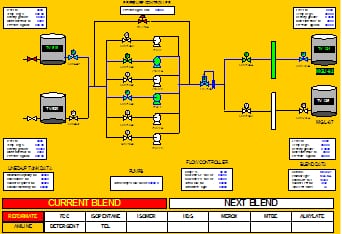
In a three-tier architecture of the blending control system, the refinery planner prepares a blend recipe by using gomsPOFBlend™ offline blend optimizer and downloads the blend order to the offsite operations department to execute it online. The objective of blending operations then becomes to make the blend within planner’s specified constraints yet with latest and sometimes dynamic process conditions. This necessitates the implementation of online blend control and optimization system (gomsPONBlend™) to produce blend with minimum quality giveaway, safely and efficiently

Applications

Online blending control and optimization scheduling system (gomsPONBlend™) can be used very effectively for:

  • Online Execution of planner’s recipe for Gasoline, Diesel and Fuel oil products in a tanks-to-tank blending configuration
  • Control the feed quality of the crude unit by blending crude from various sources varying in quality
  • Online quality control of run-downs from process units in continuous blending configuration

Benefits

  • Minimizes or eliminates the effect of dynamically changing process conditions such as component qualities
  • Blends in most economical way by minimizing quality giveaways within planner’s specified constraints
  • Online certification for direct blending into pipeline or ship
  • Production of economically optimum product blends, thereby adding to refinery’s bottom line profitability
  • Eliminates reblends due to violated specs and lack of in-line control
  • Flexible configuration of sources and destinations of blends covers all refinery setups.

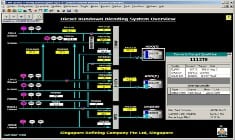
Blend line-up displayFigure 1 Blend line-up display

Features

  • Blend Setup
    • Interfaces with gomsRCPBlend™ or any third party Regulatory Blend control and offline optimizer
    • Auto setup of multiple blenders headers dynamically for product swings
    • Initializes the optimizer to check initial data integrity and online control feasibility
  • Blend Monitoring
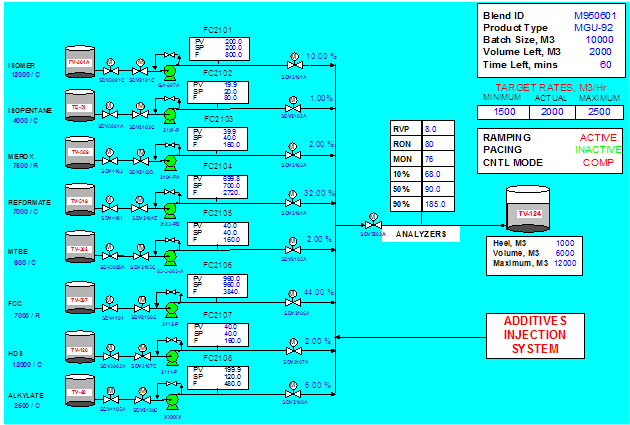
    • Automatically collects 250+ pre-configured blend variables for every cycle of execution of tank quality tracking run.
    • Monitors online header and stocks analyzers and integrates the latest results in the optimum recipe.
    • Group trends of all monitored blend variables.
    • Additive dosage control and monitoring

Regulatory Blend Control Monitoring DisplayFigure 2 Regulatory Blend Control Monitoring Display

Recipe Control & Optimization

gomsPONBlend™ controls the recipe of blend and optimizes every 10 minutes by analyzing the stock qualities and current and target qualities of final product tanks. It archives the LP matrix and solution of every optimizer execution which can be exported to gomsBlendOpt™ system for later analysis and diagnosis.

Interfaces

  • Regulatory Control Product Blend System gomsRCPBlend™ or any other third party system
  • Offline blend planning, scheduling and optimization system (gomsPOFBlend™)
  • Tank gauging system and tanks farm inventory management system gomsTIMS™
  • gomsTQTS™ for online tank quality tracking system.
  • Blend Information Management System for feedback of model biases (gomsBIMS™)

Economics

Economically, it is estimated an annual savings of 5–7MUS$ by online Blend Control and optimization alone. These benefits are achieved cumulatively by integrated three-tier implementation of offline, online and regulator blend control systems.

System Requirements

Pentium III or higher, 650+ MHZ, 256 MB RAM, 20 GB+ HDD, CD ROM, 17”+ color monitor, Window NT/2000 OS

Contact Information

Offsite Management Systems LLC
2003 Baker Estates Dr. Houston, Texas 77094, USA
Tel: +1-832-821-8001 Fax: 866-450-4035
Email: info@globaloms.com Web: www.globaloms.com

Copyright 2000-2015 Offsite Management Systems LLC. All rights reserved. OMS™, OMS logo (Tri-circle Triangle), ”…Redefining Excellence”, gomsTIMS™, gomsTQTS™, gomsPONBlend™, gomsPOFBlend™, gomsBIMS are trademarks of Offsite Management Systems LLC, USA.
Online Blend Control and Optimization & Control System

The online blend control is required to adjust the blend recipe in real-time during blend execution to account for changes in blend component qualities, available inventories, blend batch control and any last-minute adjustment in planner’s recipe. It is responsible to deliver the final blend product on spec and on target blend batch size.

Background

In a three-tier architecture of the blending control system, the refinery planner prepares a blend recipe by using gomsPOFBlend™ offline blend optimizer and downloads the blend order to the offsite operations department to execute it online. The objective of blending operations then becomes to make the blend within the planner’s specified constraints yet with latest and sometimes dynamic process conditions. This necessitates the implementation of an online blend control and optimization system (gomsPONBlend™) to produce a blend with a minimum quality giveaway, safely and efficiently.

Applications

Online blending control and optimization scheduling system (gomsPONBlend™) can be used very effectively for:

  • Online Execution of planner’s recipe for Gasoline, Diesel and Fuel oil products in a tanks-to-tank blending configuration
  • Control the feed quality of the crude unit by blending crude from various sources varying in quality
  • Online quality control of run-downs from process units in continuous blending configuration

Benefits

  • Minimizes or eliminates the effect of dynamically changing process conditions such as component qualities
  • Blends in most economical way by minimizing quality giveaways within planner’s specified constraints
  • Online certification for direct blending into pipeline or ship
  • Production of economically optimum product blends, thereby adding to refinery’s bottom line profitability
  • Eliminates reblends due to violated specs and lack of in-line control
  • Flexible configuration of sources and destinations of blends covers all refinery

OMS Online Blend Control and Optimization SystemFigure 1 OMS Online Blend Control and Optimization System

Features

  • Blend Setup
    • Interfaces with gomsRCPBlend™ or any third party Regulatory Blend control and offline optimizer
    • Auto setup of multiple blenders headers dynamically system for product swings
    • Initializes the optimizer to check initial data integrity and online control feasibility
  • Blend Monitoring
    • Automatically collects 250+ pre-configured blend variables for every cycle of execution of tank quality tracking run.
    • Monitors online header and stocks analyzers and integrates the latest results in the optimum recipe.

Online Blend MonitoringFigure 2 Online Blend Monitoring

 Run-down blenders from process units

Figure 3 Run-down blenders from process units

Recipe Control & Optimization

gomsPONBlend™ controls the recipe of blend and optimizes every 10 minutes by analyzing the stock qualities and current and target qualities of final product tanks. It archives the LP matrix and solution of every optimizer execution which can be exported to gomsBlendOpt™ system for later analysis and diagnosis.

Interfaces

  • Regulatory Control Product Blend System gomsRCPBlend™ or any other third party system
  • Offline blend planning, scheduling and optimization system (gomsPOFBlend™)
  • Tank gauging system and tanks farm inventory management system gomsTIMS™
  • gomsTQTS™ for online tank quality tracking system.
  • Blend Information Management System for feedback of model biases (gomsBIMS™)

Recipe Control & Optimization

gomsPONBlend™ controls the recipe of blend and optimizes every 10 minutes by analyzing the stock qualities and current and target qualities of final product tanks. It archives the LP matrix and solution of every optimizer execution which can be exported to gomsBlendOpt™ system for later analysis and diagnosis.

Interfaces

  • Regulatory Control Product Blend System gomsRCPBlend™ or any other third party system
  • Offline blend planning, scheduling and optimization system (gomsPOFBlend™)
  • Tank gauging system and tanks farm inventory management system gomsTIMS™
  • gomsTQTS™ for online tank quality tracking system.
  • Blend Information Management System for feedback of model biases (gomsBIMS™)

Economics

Economically, it is estimated an annual savings of 5–7MUS$ by online Blend Control and optimization alone. These benefits are achieved cumulatively by integrated three-tier implementation of offline, online and regulator blend control systems.

System Requirements

Intel Core i7 or equivalent, 3+ GHz, 32GB RAM, 1TB+ HDD, CD ROM, 17”+ color monitor, Windows 7 and higher OS

Contact Information

 Offsite Management Systems LLC
32003 Baker Estates Dr. Houston, Texas 77094, USA

Tel: +1-832-821-8001 Fax: 866-450-4035
Email: info@globaloms.com Web: www.globaloms.com

Copyright ã 2000-2011 Offsite Management Systems LLC. All rights reserved. OMS™, OMS logo (Tri-circle Triangle), ”…Redefining Excellence”, gomsTIMS™, gomsBlendOpt™, gomsRCPBlend™, gomsTQTS™, gomsPONBlend™, gomsPOFBlend™, gomsBIMS are trademarks of Offsite Management Systems LLC, USA.
oil refinery Blend Optimizers

Background

The planning of refinery blend products and the subsequent optimal control of the blending process has a significant immediate impact on refinery profitability and excess inventory. gomsPOFBlend™ off-line blending planning package considers production planning, inventory management, and the quality and value of blending components to optimize blending operations. It is a comprehensive package, which can be modularly integrated in a refinery’s MES structure.

Applications

Offline blend optimizer, planning and scheduling system (gomsPOFBlend™) can be used very effectively for:

  • Single recipe generation for Gasoline, Diesel and Fuel oil products
  • Multi-period blend planning for weekly inventory control and monthly production forecast
  • Conducting blend studies for operational change modeling and LP verification
  • Reblending to correct off-spec blends
  • Backcasting to calculate blend models parameters and bias terms
  • Analysis of compliance with EPA, CARB rules
  • Blend Recipe Management and Automatic downloading of next blends recipes to online execution

Benefits

  • Shift usage of more economical components
  • Determine and exploit on-the-spot opportunities quickly
  • Link refinery-wide planning to short term logistics
  • Remove guesswork and artistry from blend planning
  • Production of economically optimum product blends, thereby adding to refinery’s bottom line profitability

Online Blend Control and OptimizationFigure – 1 OMS Blend Control, Optimization and Planning System Hierarchy

Features

  • Basic
    • Blending full range of gasoline grades, aviation jet to diesel fuel for distillate blends, and fuel oil blends.
    • Multi-period planning with inventory control constraints.
    • Number of multiple periods, feed-stock components, and product grades limited only by computer memory size availability.
    • Can choose non-linear predictive methods “on the fly” for qualities
    • Maximize profit, Minimize quality giveaway, Calculation only optimization Choices
    • Determine the header targets for properties for an online system
  • Advanced
    • Inventory Management – account for changing production and set time dependent limits
    • Group Specifications – property constraints over groups of blends
    • Heel Tracking – accounting for volume / qualities in tank already, for each use Component
    • Pooling – simulate rundowns
    • Generalized free-formatted linear and non-linear equations generation and management system (GAMS™)
    • User Selectable options for multiple Correlations for 36 qualities
    • 3 User definable blend qualities
  • Extended
    • Octane Blending Values – determine indices for use in LP’s
    • Blend Property Control Interfaces- send recipes directly to on-line system
    • Biases – add values to correct consistent errors

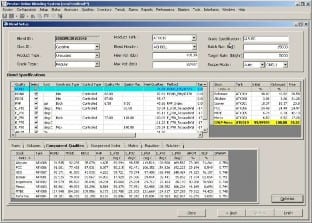
Stock Availability Data EntryFigure – 2 Stock Availability Data Entry

    • Giveaway Ranges – ensure blend remains close to specification
    • Infeasibility Control – recover from “impossible” situations, relax constraints until solution is found
    • “Distress” Buy / Sell – provides indication of why problem won’t solve, calculate volume / quality needed to make an infeasible problem solve
  • Environmental
    • EPA RFG Models – blend to emission specifications, ignores extrapolations at iteration-level (may impact), report exactly as written
    • CARB Phase II Predictive Model – report emissions, report acceptability
  • Modeling and Correlations
    • Preferred Recipe Penalties – encourages model to stay near a preferred Starting recipe
    • Product Group Limits – volume constraints over groups of blends
    • Product Group Relations – relate production of blends to each other
    • User selectable built-in well proven correlations for over 40 properties for gasoline, diesel and fuel including EPA RGF and CARB models
    • Optimal scheduling of multi-period blends

Reports ManagerFigure – 3 Reports Manager

Interfaces

gomsPOFBlend™ allows direct interface with

  • Regulatory and Online blend control and optimization system (gomsPONBlend™)
  • Laboratory and Tank gauging data
  • gomsTQTS™ for online tank quality tracking system.
  • Blend Information Management System for feedback of model biases (gomsBIMS™)

Economics

Economically, it is estimated an annual savings of 750K–1.5MUS$ by Offline Recipe Optimization, and planning and Scheduling of blends.

System Requirements

Intel Core i7 or equivalent, 3+ GHz, 32GB RAM, 1TB+ HDD, CD ROM, 17”+ color monitor, Windows 7 and higher OS

Contact Information

Offsite Management Systems LLC
2003 Baker Estates Dr. Houston, Texas 77094, USA
Tel: +1-832-821-8001 Fax: 866-450-4035
Email: info@globaloms.com Web: www.globaloms.com

Copyright 2000-2015 Offsite Management Systems LLC. All rights reserved. OMS™, OMS logo (Tri-circle Triangle), ”…Redefining Excellence”, gomsTIMS™, gomsTQTS™, gomsPONBlend™, gomsPOFBlend™, gomsBIMS are trademarks of Offsite Management Systems LLC, USA.
Background

Offsite Management Systems specializes in consulting related to fuel blending and automation of refinery offsite operations. We are surveying US and Canadian refineries on the performance of their fuel blending operations to establish performance benchmarks and best practices in this area.

The survey evaluates fuel (Gasoline, Diesel, kero and Fuel oils) blending operations in each refinery by the following two indices:

  1. Automation Effectiveness
  2. Operational Efficiency

Automation Effectiveness

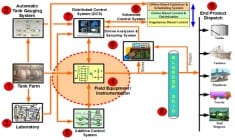
It reflects the sophistication of blending system installed at the refinery as well as the usage of the system by refinery staff. The calculation of automation effectiveness includes information on:

  • Tank farm automation (signals, stock tank allocations, line-up)
  • Field Equipment (Pumps, control valves, MOV’s)
  • Timely availability of component property information
  • Types of analyzers, their locations and sampling methods
  • Computer Hardware (DCS, APC)
  • Regulatory and Advanced Control Strategy
  • Reconciliation of plan versus executed blends

Fuel Blending operations Benchmarking Survey

Figure 1 Modules evaluated for Automation Effectiveness Index

Operational Efficiency

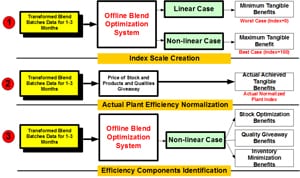
It measures how well blending operations are performed on a day-to-day basis. The calculation of operational efficiency takes into account both properties give-away in the final blend (if any) and formulation of optimum recipes by using least expensive components available in the stocks pool.

  • Evaluates actual blend execution data against best case and worst case
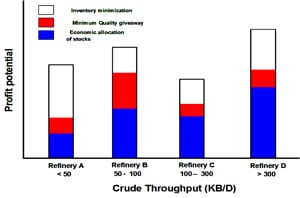
  • Measures profit improvement potential in $$ / year and separates benefits by

-Stock economics

-Giveaway minimization

-Inventory minimization

  • Ranks against other refineries using ratio of profit captured / profit available

Process to estimate the Operational Efficiency Index

Figure 2 Process to estimate the Operational Efficiency Index

Benefits

  • A detailed, independent assessment of blending operations at your refinery
  • Benchmark against the rest of the industry

– How automated are blending operations?
– How well are blending operations executed?

  • Identifies specific improvement projects with benefits for each project

– Sound basis for project appropriation

  • Measure improvement over time

– Project post audit

Examples of Identified Project Benefits

Figure 3 Examples of Identified Project Benefits

Required Data

  1. Supply information about the configuration of the plant blending equipment and operations, a detailed fill-in list of questionnaires will be supplied.
  2.  Supply 6 to 12 months of blending operational data for actually executed blends. OMS will furnish a formatted excel worksheet to input all required data. Alternatively, a dump of information from your plant database can also be used.

Methodology

  1. We will issue detailed questionnaires to assess the level of blending automation from all points of view and assign detailed weighting factors and status level to each and every category of automation to generate an automation effective index for your refinery. In our experience, this is accurate with ± 5% for all practical purpose.
  2. OMS will use our own optimization software to re-evaluate and optimize each and every blend batch data to evaluate how effective your blending was and to estimate the lost tangible benefits from recipe and inventory optimization to minimize quality giveaways.
  3. We use all latest nonlinear blend models and non-linear optimizer algorithm to capture maximum benefits. Lowest benefits are calculated using linear blending models and simply linear programming.
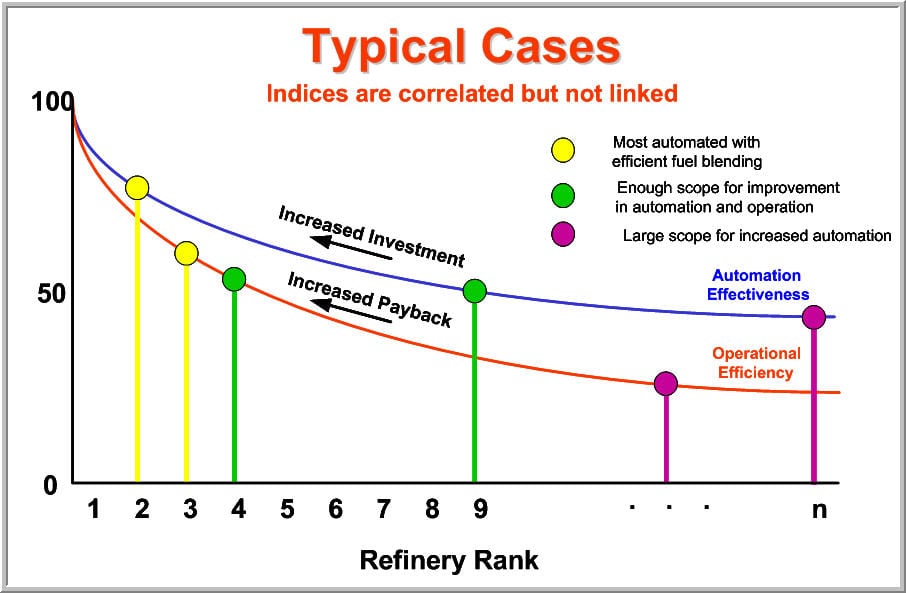
  4. Above methodology will generate two indexes for your refinery as shown below and will be compared with other refineries on the same basis.

Relative Refinery Rankings

Figure 4 Relative Refinery Rankings

Deliverables

  1.  A report on the overall findings of the survey
  2.  Operational efficiency and automation effectiveness indices for your refinery
  3. Comparison of your operational efficiency and automation effectiveness to the aggregated results of the refineries in the study
  4. A presentation by an OMS expert on the results of the survey

Schedule and Cost

  1. Month-1 Kick-off and Data Collection and consolidation
  2. Month-2 Data Analysis and generation of Efficiency indices
  3. Month-3 Compilation of final survey Report and presentation of results
  4. Month-4 Follow-up and close-out

Please contact us for quotation to participate on individual refinery basis or for corporate-wide refineries.

Confidentiality

OMS will not reveal the name of refinery and/or its confidential information to any participating or non-participating refinery in the common report.  However, refinery specific individual report will indicate your location on all comparison charts to clearly indicate your standing in that criterion.

Contact Information

If you would like to participate in the survey or partner with us, please contact us.

Offsite Management Systems LLC
2003 Baker Estates Dr. Houston, Texas 77094, USA

Tel: +1-832-821-8001 Fax: 866-450-4035
Email: info@globaloms.com Web: www.globaloms.com

Copyright 1998-2015 Offsite Management Systems LLC. All rights reserved. OMS™, OMS logo (Tri-circle Triangle), ”…Redefining Excellence, gomsTQTS™ are trademarks of Offsite Management Systems LLC, USA.
Background

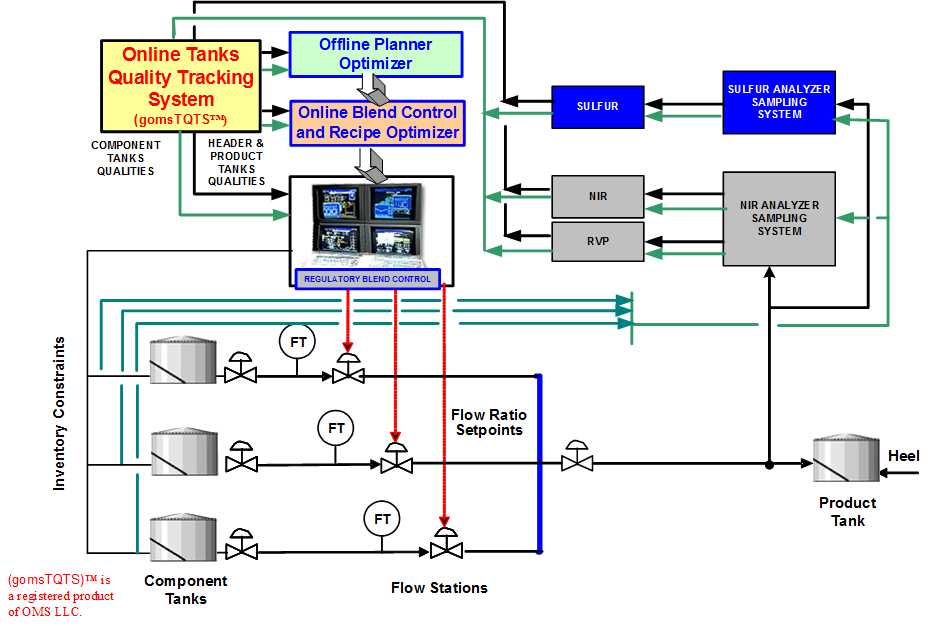
Every processing unit in a refinery or chemical plant requires the quality and quantity of its feedstocks stored in its tank farm. Although the inventory of products and stocks can be obtained online by implementing a combination of automatic Tank Gauging System (ATG) and Tanks Inventory Management Systems (gomsTIMS™), their qualities are not available online in real-time. Since there is a time lapse between the lab samples, its analysis and data entry, any quality dependent processing and control decisions are done on old quality values. Even online analyzers do not always solve the problem as they are installed either upstream of the tank or downstream of the processing unit.

A comprehensive Tank Quality Tracking System enables the online and near real-time availability of tank qualities to plant processing units and minimizes costly and time-consuming lab analyses of tank samples.

Tank Quality Tracking System Applications

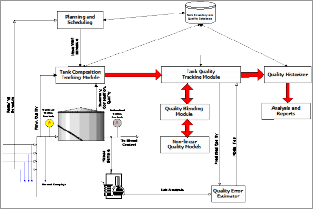
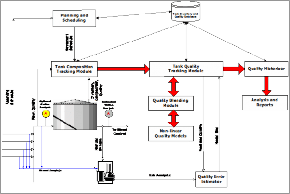
Figure – 1 gomsTQTS™ System Architecture

Applications

Tank Quality Tracking System (gomsTQTS™) can be used very effectively for:

  • Products Blending
  • Crude Blending
  • Naphtha Blending
  • Online control of process units
  • Plant-wide planning and scheduling
  • Process optimization

Benefits

  • Reduction in man-power cost for sample collection & lab analysis
  • Online optimization of process Units
  • Reduction in capital Expenditure of online analyzers
  • Online availability of Stock tank qualities for Blending
  • Online Certification of tanks and blended product
  • Minimization of off-spec or quality giveaway

Composition Tracking

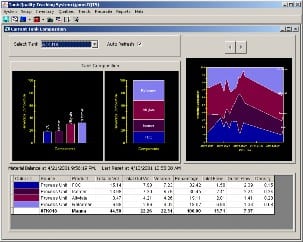
gomsTQTS™ provides a facility for composition tracking of any tank at all times. At any point of time the composition of the tank contents will be calculated using the data/information on flow rates of different components in the tank. This will lead to component wise consumption/requirements with respect to any tank or blend. The menu ‘Inventory/Tank Composition’ will show the Tank Composition details for a selected tank.

Tanks Composition Tracking

Figure – 2 Tanks Composition Tracking

Quality Tracking

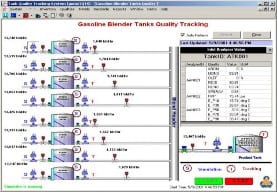
The Tracking of Qualities will always be done for all the qualities that have been configured for tracking. This is done through continuously calculating the qualities of the tank contents using data from process interface and mathematical models. Thus, a lot of data is generated continuously. Every time a current set of data is generated, the previous set of data will be appended in the history table of the data. This data is analyzed and converted into proper information for the decision-making. This data can be retrieved either ‘Tank wise’ or ‘Product wise’.

omsTQTS-Fig-2

Figure – 3 Quality Tracking for Gasoline Blender

Additional Capabilities

The system also has the following additional features:

  • Quality calculator
  • Reconciliation from lab or online analyzers
  • Historizer
  • Integrated Operator Training Simulators

Multi tanks quality trends

Figure – 4 Multi tanks quality trends

Features

  • Online Tracking of tank composition and qualities
  • Non-linear quality models for crude and finished products
  • Lab analysis or online analyzers of tank source stream
  • Inter-connection of tanks maintained for quality integration purpose
  • In and outflows accounted for in the tank mass balance
  • Tabular or graphical Historical Tank qualities
  • Lab analysis of tank samples used for model bias corrections
  • Integrated with comprehensive tank information management system and inline blending control systems
  • Comprehensive reports and management
    information system
  • Selection of Quality models and methods
  • Online grouped and zoomed trend plots
  • Configuration of online analyzer
  • Manual or automatic lab data entry
  • Online alarms
  • Interfaces with tank gauging system, blenders, user access security

Economics

Economically, it is estimated an annual savings of $4,000-$5,000 for a reduction of 1 TQS number by online quality tracking system gomsTQTS™ where TQS = (Number of Tanks) * (Number of qualities analyzed /(sample-tank)) * (Number of Samples / tank).

System Requirements

Intel Core i7 or equivalent, 3+ GHz, 32GB RAM, 1TB+ HDD, CD ROM, 17”+ color monitor, Windows 7 and higher OS

Contact Information

Offsite Management Systems LLC
2003 Baker Estates Dr. Houston, Texas 77094, USA

Tel: +1-832-821-8001 Fax: 866-450-4035
Email: info@globaloms.com Web: www.globaloms.com

Copyright 2000-2015 Offsite Management Systems LLC. All rights
reserved. OMS™, OMS logo (Tri-circle Triangle), ”…Redefining
Excellence, gomsTQTS™ are trademarks of Offsite Management
Systems LLC, USA.
Your refinery operations deserve smarter automation

From tank farm control to hydrocarbon loss reduction, Global OMS delivers digital solutions trusted by refineries worldwide.