

Clean Energy

Can clean energy truly power the industry without compromise? This article breaks down the evolving landscape of the clean energy revolution, clarifying the differences between clean, renewable, and low-carbon sources. You’ll discover how innovations like green hydrogen, conductive firebricks, and intelligent electrification are reshaping industrial operations. Plus, see how OMS is helping refineries and manufacturers decarbonize while staying competitive.

The future is green energy, sustainability, renewable energy.” – Arnold Schwarzenegger”

Defining Clean vs. Renewable vs. Low-Carbon

Let’s clear up some of the confusion. While cleanrenewable, and low-carbon terms are often used interchangeably, they refer to different technical characteristics.

  • Renewable energy refers to sources replenished naturally on a human timescale, such as solar, wind, hydroelectric, geothermal, and tidal power. These sources are generally both sustainable and environmentally benign.
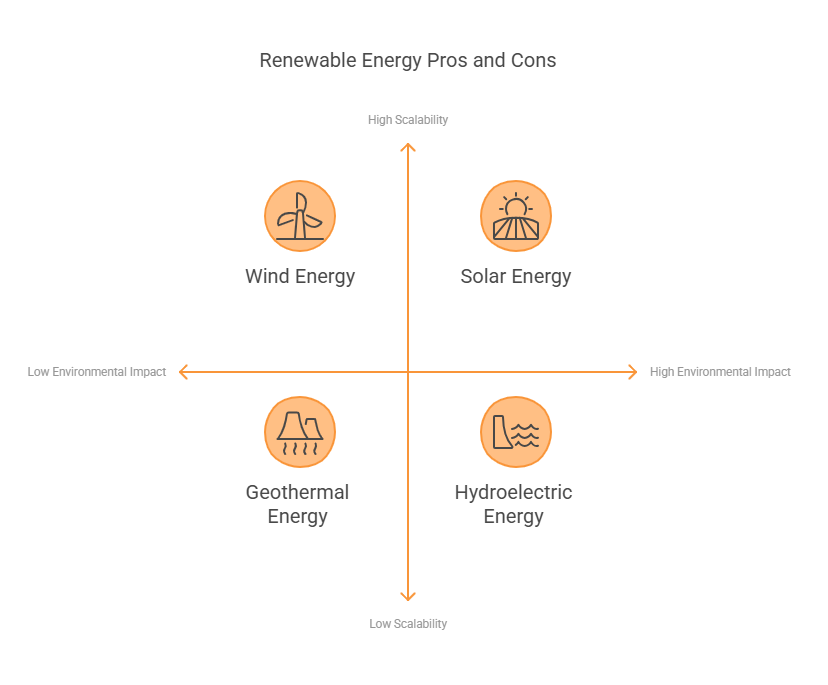
  • Clean energy, however, focuses more on environmental impact, especially regarding greenhouse gas emissions and air pollutants. While most renewable sources are also clean, the term can include non-renewables like nuclear power with low operational emissions.
  • Low-carbon energy is defined by its carbon intensity—how much CO₂ is emitted per unit of energy produced. This category includes renewables and nuclear power, but not all sources are renewable or clean in every respect.
Take nuclear energy, for instance. Technically, it’s low-carbon, emitting near-zero CO₂ during electricity generation. But it’s not renewable, since it relies on finite uranium isotopes and involves long-term radioactive waste considerations.

Now, hydrogen is a particularly nuanced case. It’s often promoted as a clean fuel, but its carbon footprint depends entirely on the feedstock and production pathway:

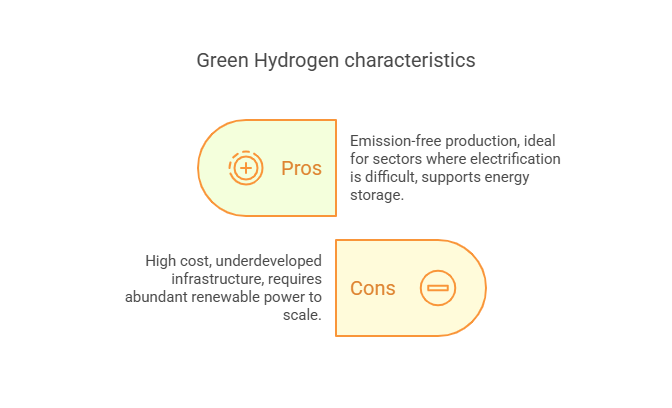
  • Green hydrogen is produced via electrolysis powered by renewables, making it virtually emission-free.
  • Blue hydrogen uses steam methane reforming (SMR) with carbon capture and storage (CCS), reducing but not eliminating emissions.
  • Gray hydrogen, the most common type today, is also produced via SMR—but without CCS, making it carbon-intensive.

So, simply calling something “clean” doesn’t cut it. We need to consider its source, lifecycle emissions, and operational feasibility. These distinctions matter, especially in industrial environments where emissions targets, system compatibility, and return on investment must be balanced carefully.

How OMS Helps Clarify Operational Implications

That’s precisely where OMS adds value.

We work with clients to interpret and apply these technical distinctions meaningfully for their operations. For example, when an energy source is marketed as “clean,” OMS ensures it’s evaluated not just on paper, but in terms of:

  • Net emissions reduction based on complete lifecycle analysis
  • Cost-performance trade-offs over time
  • Compatibility with existing control systems, blending units, and data infrastructure

Using our model-driven simulation tools, FPBM analyzers, and AI-enhanced optimization engines, we help refineries and energy facilities determine whether proposed technologies or fuel shifts genuinely support corporate sustainability goals and economic performance.

It’s not just about meeting regulatory thresholds; it’s about achieving measurable decarbonization progress without compromising efficiency, safety, or long-term scalability. With OMS, you’re not just checking boxes—you’re building an operationally sound and future-ready energy strategy.

Energy Sources on the Clean Spectrum

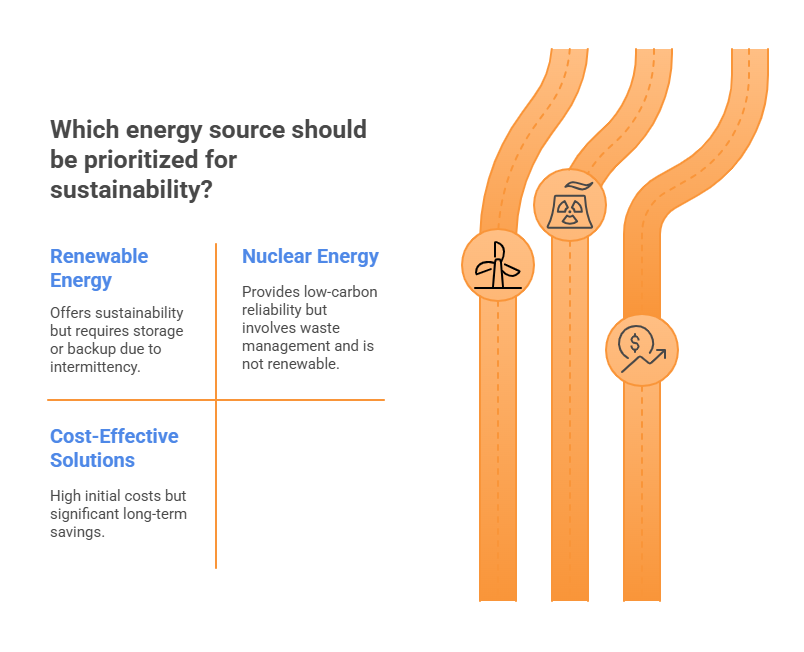
A well-rounded energy strategy requires a clear understanding of the strengths and limitations of different power sources. Renewable energy options like solar, wind, hydro, and geothermal stand out for their sustainability and minimal environmental impact. They help reduce carbon emissions, offer long-term reliability, and are key players in global decarbonization efforts. However, they also come with operational challenges such as intermittent availability, regional feasibility, and higher upfront costs. Meanwhile, nuclear energy provides consistent, low-emission output but brings concerns around safety and radioactive waste.
OMS and Hybrid Integration Strategies

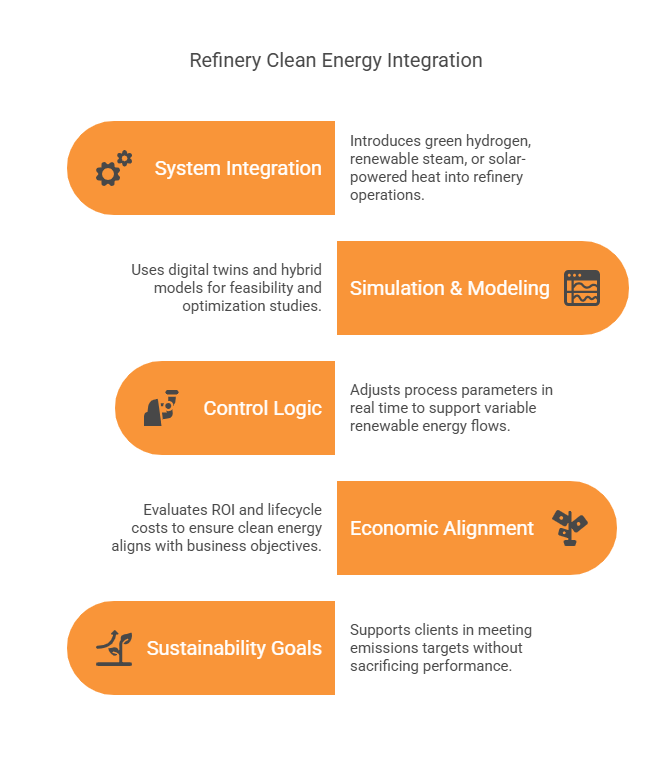
By facilitating hybrid integration strategies, OMS supports refineries and heavy industries in navigating the shift toward cleaner energy. This means combining conventional systems with renewable inputs, like green hydrogen or renewable steam, without disrupting operations. Using advanced simulations, model-based decision tools, and real-time automation, OMS ensures that any alternative energy integration maintains thermal stability, throughput, and economic viability. Whether retrofitting systems or co-processing renewable fuels, OMS delivers strategies that make sustainability achievable and cost-effective.
The Case for a New Industrial Revolution

We’re witnessing more than just a tech upgrade—a fundamental transformation of industrial and energy businesses’ operations. Clean technologies aren’t only about reducing emissions; they’re actively reshaping business models, creating new markets, and accelerating a data-rich, decentralized energy ecosystem.

Here’s what that means in practice:

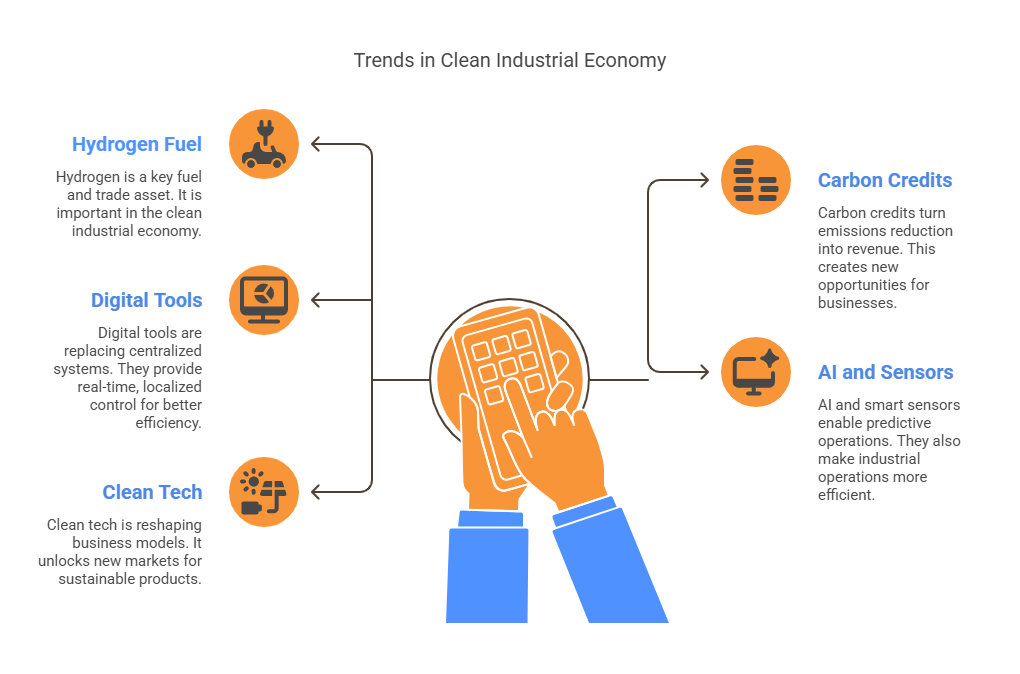
  • Hydrogen production and trading are emerging as a cornerstone of the clean industrial economy. Countries and companies are racing to scale green and blue hydrogen infrastructure, with regional hubs, trading platforms, and certification standards beginning to form.
  • Carbon credits and emissions markets are evolving into strategic financial assets. Companies that decarbonize operations can monetize avoided emissions, creating new revenue streams and influencing investment decisions.
  • Digitalization and decentralization are enabling more agile and efficient operations. Real-time data from smart sensors, predictive analytics, and AI-driven energy management systems replace centralized, reactive decision-making with localized, optimized, and automated control.
These shifts are not theoretical—they’re becoming practical imperatives. Industrial firms are responding not only to regulatory pressures and ESG goals but also to clear economic incentives. Governments offer subsidies, tax credits, and procurement preferences to low-emission producers. Investors favor companies with transparent climate strategies and resilient, forward-looking business models.

That’s where OMS comes in—as more than just a technology provider. As a strategic partner, we confidently help refiners and industrial clients navigate these disruptive changes.

OMS helps clients:

  • Adapt to low-carbon value chains by optimizing fuel blending, emissions accounting, and product life cycle impact.
  • Capture emerging market opportunities, such as leveraging low-carbon certifications or qualifying for clean hydrogen offtake agreements.
  • Deploy robust digital infrastructure to support real-time data capture, system-wide optimization, and compliance with emissions tracking regulations.

Our hybrid approach, combining model-based simulation, AI/ML optimization, and deep domain expertise, ensures that clients don’t just adopt new technologies but fully integrate them into operational and financial strategy.

In a fast-moving innovation landscape, OMS enables clients to lead in the clean industrial revolution, not just react.

Innovation in Materials, Storage, and Efficiency

Some of the most groundbreaking solutions in the clean energy transition involve rethinking old technologies in new ways, and conductive firebricks are a prime example.

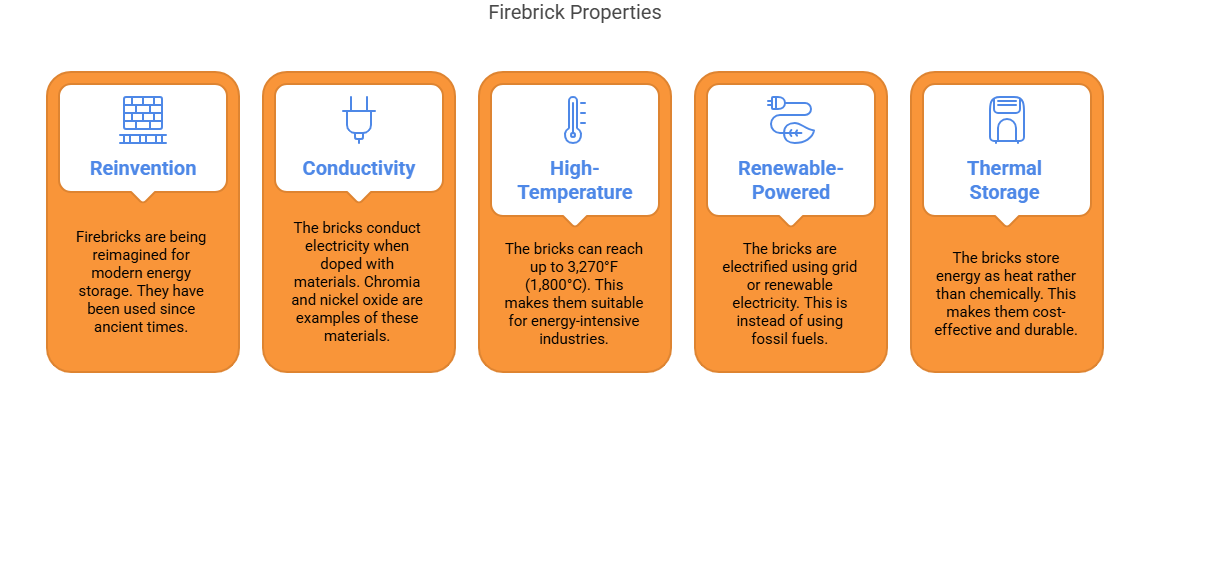
Initially used since the Bronze Age to store and radiate heat in kilns and furnaces, firebricks are now being reinvented as part of a next-generation solution for industrial energy storage. Instead of relying on fossil fuels to heat them, companies like Electrified Thermal Solutions have developed electrically conductive firebricks that store energy in high-temperature heat.

Here’s how it works:

  • These bricks are doped with chromia and nickel oxide, allowing them to conduct electricity.
  • When powered by the grid (especially renewable sources), they can be heated to as high as 3,270°F (1,800°C), enough to support high-heat industrial processes such as steelmaking or glass production.
  • Rather than storing energy chemically (as batteries do), they store it thermally, offering a more cost-effective and durable option for intermittent renewable energy storage.
This shift could save industries billions. According to Stanford professor Mark Jacobson, using firebrick-based systems in a global renewable energy transition could save over $1.2 trillion by 2050, primarily because these systems are roughly one-tenth the cost of batteries.

What makes this particularly promising is its minimal process disruption. Many industries already use firebricks; now, they can electrify those same processes with limited retrofitting, making this an ideal transitional technology.

That said, deployment will take time. Early adopters may still rely on hybrid systems, combining grid electricity with backup natural gas. But as renewable energy capacity increases, this approach offers a realistic, scalable pathway to deep decarbonization.

OMS Tech-Ready Workforce Programs

To support the adoption of innovations like conductive firebricks and other electrified heat technologies, OMS offers specialized training programs that prepare engineering teams to operate and optimize hybrid, data-rich systems.

Here’s how OMS makes the transition seamless:

  • Upskilling legacy teams with training on thermal energy storage, grid-responsive operations, and electrified process integration.
  • Simulations and virtual labs that mirror emerging technologies, allowing engineers to test scenarios in safe, controlled environments.
  • Certification pathways align with decarbonization and digital transformation goals, empowering plant managers and operators to lead technology upgrades confidently.
  • Curricula tailored to evolving standards, including electrification of high-heat applications, process automation, and emissions tracking systems.

By bridging the gap between traditional combustion-based systems and next-gen technologies, OMS ensures that the workforce isn’t left behind—it’s ready to lead.

Or Is It Old Wine in a Green Bottle?

Greenwashing and Energy Hype Cycles

Greenwashing seriously threatens meaningful sustainability efforts by distorting reality and misleading environmentally conscious consumers. When companies exaggerate or fabricate their eco-friendly claims—whether through vague labels, misleading advertising, or selective disclosure—they erode public trust and divert attention from brands truly committed to sustainable practices. The recent surge in high-profile greenwashing cases across sectors like fashion, energy, aviation, and finance underscores the urgent need for transparency, accountability, and third-party verification in green marketing. These examples serve as critical reminders that sustainability is not just a branding exercise—it must be grounded in measurable, honest, and verifiable actions.
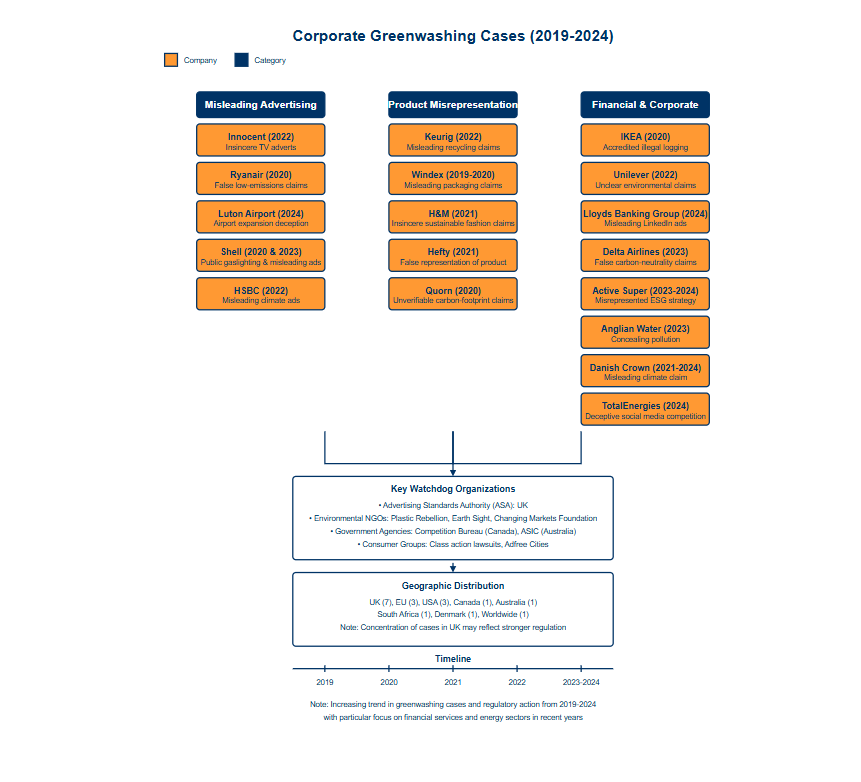
OMS supports organizations in cutting through the noise of greenwashing by conducting rigorous, data-backed sustainability evaluations. We help clients ensure their environmental claims stand up to scrutiny and drive real impact, not just public perception.

Here’s how OMS helps:

  • Lifecycle Emissions Analysis – Assessing actual environmental footprint across supply chains
  • Verification of Green Claims – Auditing sustainability metrics against actual performance
  • Regulatory Alignment – Ensuring compliance with ESG disclosures and green marketing standards
  • Risk Reduction – Avoiding reputational damage and legal exposure from misleading claims
  • Credibility Building – Supporting authentic brand positioning in low-carbon markets

With OMS as a strategic partner, businesses can confidently lead with honest sustainability that earns trust and delivers value.

Equity, Infrastructure, and the Global Divide

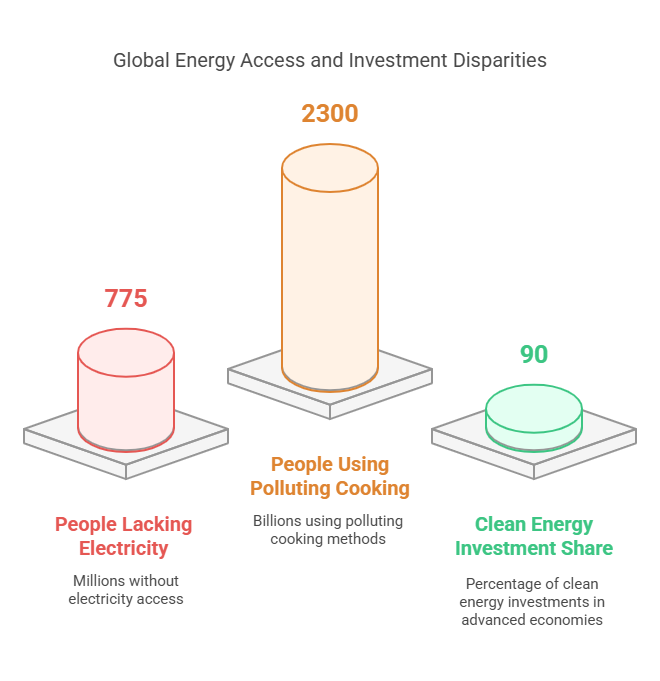
Equitable access to clean energy remains a critical barrier in the global energy transition, particularly for developing nations. Currently, 775 million people lack access, and 2.3 billion rely on traditional cooking methods, disproportionately affecting Sub-Saharan Africa​.

Despite increasing global investments, over 90% of clean energy investment growth since 2021 has been concentrated in advanced economies and China, leaving emerging markets behind​. Transitioning to cleaner energy also introduces costs, job displacement, affordability concerns, and infrastructure burdens, which risk marginalizing vulnerable communities.
OMS Supports Equitable, Modular Transitions

OMS works closely with clients in emerging markets to develop modular, adaptive solutions that support decarbonization while addressing local realities, such as limited capital, infrastructure gaps, and community concerns.

By integrating data-driven tools, localized engagement, and flexible technology models, OMS helps ensure that clean energy projects are inclusive, financially viable, and socially accepted. This approach enables clients to meet emissions goals and build long-term trust and resilience in underserved communities.

Clean Energy’s Role in the Downstream Equation

Decarbonizing Without Disruption

Refineries don’t need to sacrifice productivity to meet emissions targets. As Boston Consulting Group’s report “Readying Refineries for a Low-Carbon Future” highlighted, leading operators are cutting carbon through cleaner fuels, efficiency upgrades, and alternative product pathways without major operational overhauls.

What does that look like in action?

  • Transitioning to green hydrogen, renewable electricity, and biofuels as energy inputs
  • Using digital twins, process controls, and energy audits to reduce energy intensity
  • Shifting production toward renewable diesel and sustainable aviation fuel (SAF)
  • Rolling out changes incrementally, starting with low-hanging fruit like heat recovery or hydrogen blending

The focus is on strategic sequencing, making practical, cost-effective moves that deliver impact without disrupting day-to-day operations.

OMS’s Low-Carbon Refining Toolkit

That’s precisely where OMS steps in, with the tools and strategies to make low-carbon refining work in the real world.

  • Simulation platforms to evaluate changes before implementation
  • First-principles-based modeling to uncover inefficiencies in blending and utilities
  • Seamless integration with DCS, LIMS, and emissions tracking systems
  • Custom roadmaps and KPI benchmarking that align emissions goals with production and cost targets

Refineries can transition toward sustainability with OMS without compromising performance, uptime, or profitability.

Matching Clean Inputs to Process Constraints

Integrating clean energy into refineries requires more than fuel replacement—it demands alignment with existing thermal loads, pressure systems, and product quality requirements. For example, electrified heat must deliver the intensity needed for distillation and cracking, while hydrogen must match combustion and pressure specifications. Misalignment can lead to inefficiencies or safety risks. WRI’s Technological Pathways for Decarbonizing Petroleum Refining notes that careful system modeling and tailored retrofits are essential. The goal is to decarbonize without compromising performance, ensuring new energy sources work seamlessly within established refinery frameworks.

OMS Process Compatibility Modeling

OMS uses innovative simulation tools to help refineries integrate renewable energy, like clean hydrogen or electrified heat, into their existing operations. By modeling things like thermal loads, pressure systems, and process flow, OMS ensures everything stays compatible. The result? A smoother transition with fewer disruptions, allowing refineries to cut emissions while keeping performance, safety, and product quality right where they need to be.

Conclusion – Clean Energy Isn’t the Goal. Smart Energy Is.

The clean energy transition isn’t just about replacing fossil fuels with new technologies; it’s about rethinking energy usage. Actual progress lies in building innovative, efficient, and resilient energy systems that reduce emissions and improve performance, adaptability, and long-term value. Clean energy without a strategy can lead to inefficiencies, downtime, and missed opportunities. The real goal is smart energy: intelligent, data-driven, and optimized systems for sustainability and business outcomes. This requires a shift in mindset, from technology-first to systems-first thinking.

OMS helps clients make that shift. It is a strategic partner in the energy transition by connecting innovative energy technologies with real-world operations. From simulation and modeling to system integration and roadmap planning, OMS ensures that sustainability isn’t just a checkbox but a competitive advantage. With OMS, intelligent energy becomes both achievable and profitable.
next gen refineries

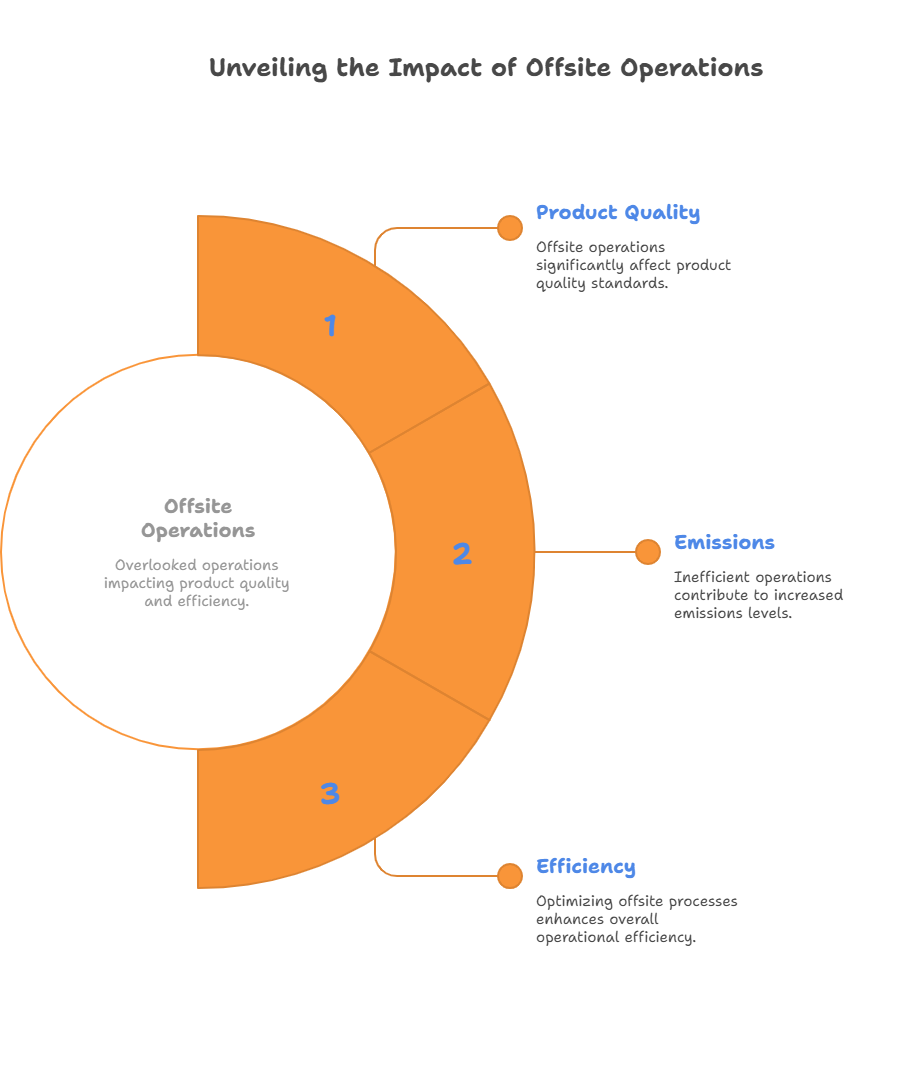
Refineries’ offsite operations, blending, storage, and logistics are often overlooked, yet they heavily impact product quality, emissions, and efficiency. McKinsey estimates that AI can unlock $275 billion annually in the oil and gas industry by addressing off-site inefficiencies. Deloitte cites that oil companies often lose value by missing blend targets or circulating more than needed, but AI can help fix that by giving real-time insights to make better decisions.

How AI-Driven Blending Is Transforming Refinery Operations

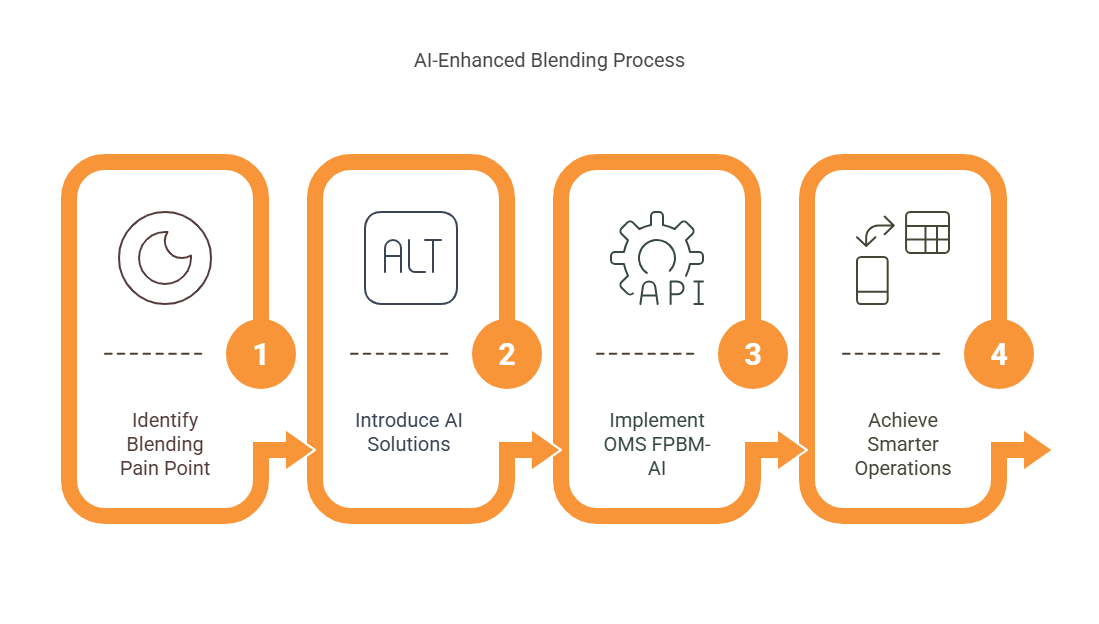
Blending is the last step before products leave the refinery, and it’s often where things go wrong. Traditional systems rely on rigid rules and offline analyzers, which means they react slowly and often fail to meet expectations. That leads to reblends, delays, and lost profits.

AI is changing the game. Tools like AspenTech’s Aspen MultiBlend utilize machine learning to adjust blend ratios in real-time, ensuring everything remains on spec while reducing giveaway and rework. AVEVA’s solutions go a step further by handling complex, multi-component blends with dynamic, on-the-fly optimization.

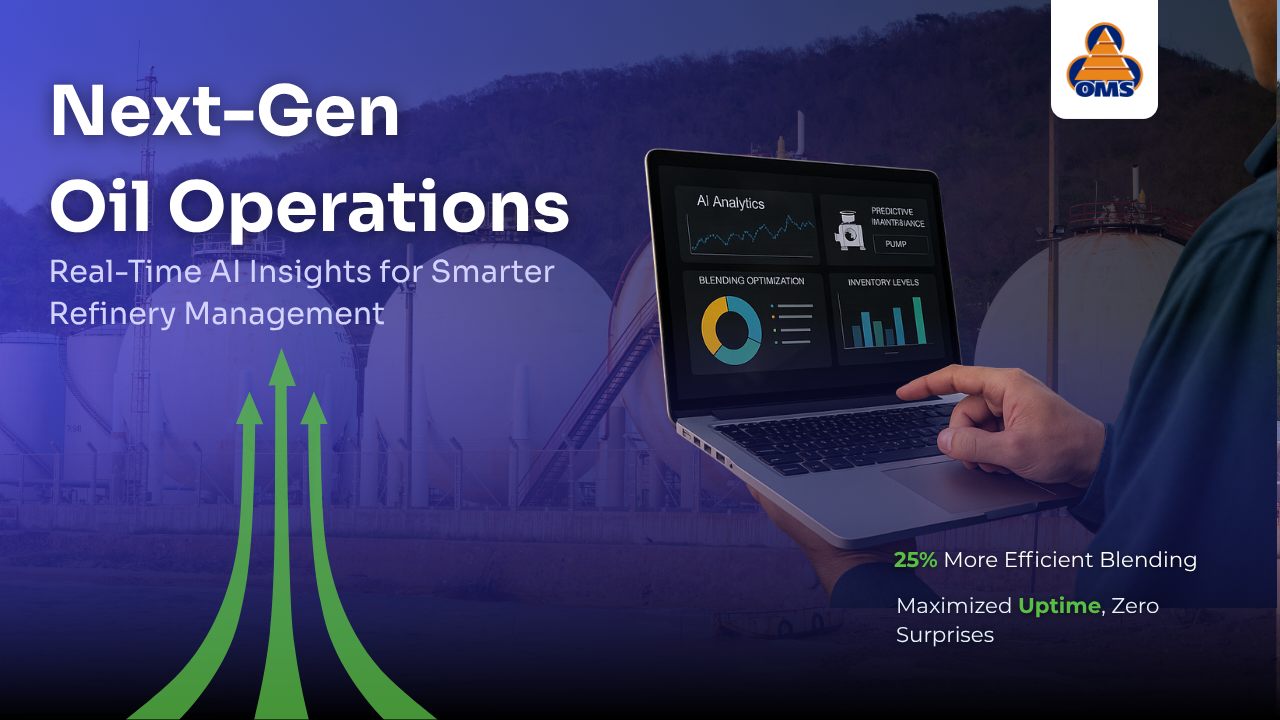
At OMS (Offsite Management Systems LLC), we take it even further with our hybrid First Principles + AI Blending Model (FPBM-AI). It combines deep engineering expertise with intelligent, adaptive capabilities. In a recent proof of concept (PoC) with Ecopetrol, it reduced reblends by 25% and increased margins.

This isn’t just automation—it’s a more innovative, more strategic way to run your blending operations in real time.

How AI Predictive Monitoring Prevents Equipment Failures in Refineries

In a refinery, pumps, valves, and movement control loops function like the circulatory system, ensuring operations flow smoothly. However, when one of these components fails without warning, it can cause costly delays or even bring entire processes to a halt. 

Traditionally, maintenance has been either reactive (fix it after it breaks) or schedule-based (maintain it whether needed or not). Both approaches often result in either unnecessary upkeep or interventions that happen too late.

This is where AI changes the game. By converting real-time telemetry, like vibration signals, flow inconsistencies, or temperature anomalies, into actionable insights, AI systems learn to detect subtle signs of trouble long before failure occurs.

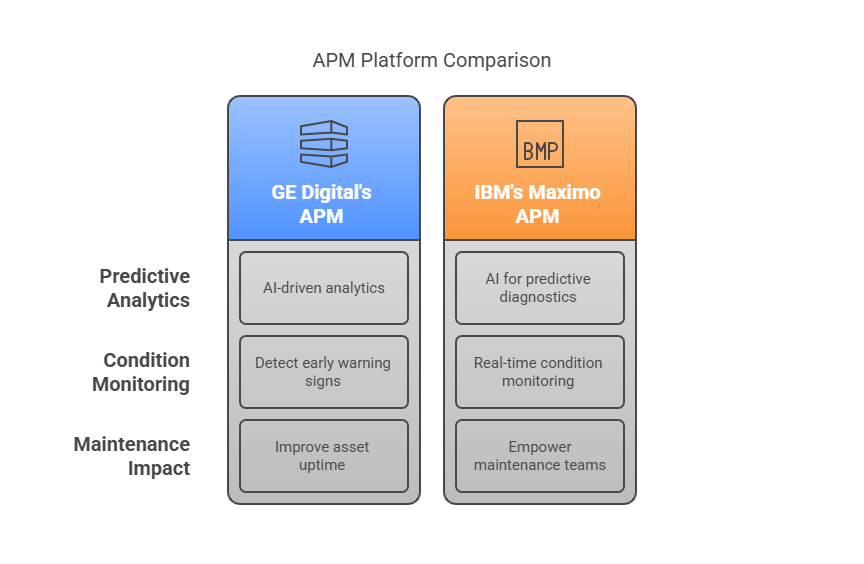
Leading platforms showcase this transformation:

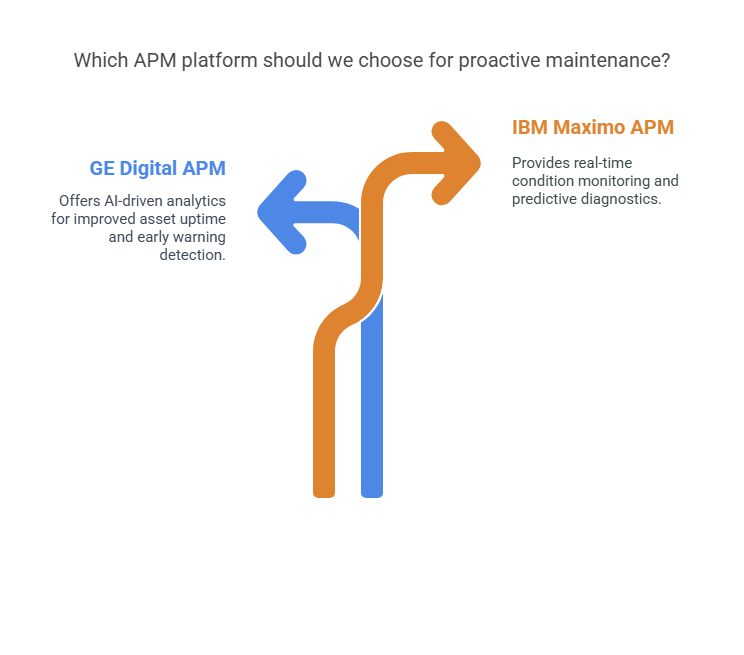
  • GE Digital’s Asset Performance Management (APM) leverages AI analytics to detect early warning signs hidden in sensor data. The result? Increased asset uptime and fewer unplanned shutdowns.

IBM’s Maximo APM offers real-time condition monitoring and predictive diagnostics for critical equipment like pumps, compressors, and valves. This enables maintenance teams to act early, minimizing disruption and extending asset life.

OMS’s AI-powered movement monitoring system detected early pump drift at a Middle East refinery—well before alarms triggered—enabling proactive maintenance and avoiding a $180,000 production loss. This predictive insight helps operators prevent downtime, ensuring movement systems run reliably, efficiently, and with no surprises.

How AI Enhances Inventory Reconciliation and Loss Control in Refineries

Inventory reconciliation is critical for keeping refineries on track, ensuring mass balance, loss control, and regulatory compliance. However, it’s often disrupted by issues like sensor drift, manual entry errors, or unnoticed flow irregularities. 

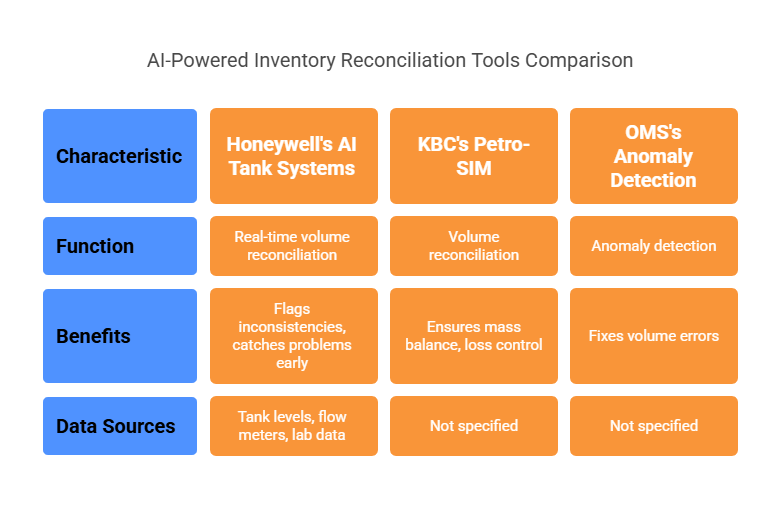
This is where AI makes a real difference. By analyzing data from tank levels, flow meters, and lab results, AI can reconcile volumes in real time, quickly flag inconsistencies, and catch problems before they escalate.

For instance, tools like Honeywell’s AI-powered tank systems and KBC’s Petro-SIM are already proving their value in the field. At one site in Southeast Asia, OMS applied its AI-based anomaly detection to correct a 3% volume error caused by a faulty radar, preventing a major reporting mistake and saving both time and money.

It’s a smarter, faster way to ensure accuracy and build trust with regulators and stakeholders.

How AI-Powered Forecasting Improves Dispatch Scheduling in Refineries

Manual dispatch forecasting often depends on static assumptions and delayed signals, leading to overproduction, frequent tank switchovers, and tighter margins. This reactive approach struggles in today’s fast-changing market conditions.

AI introduces agility. By analyzing historical trends, real-time market signals, and operational limits, AI can predict demand more accurately and adaptively.

Technologies like ABB’s MPC-based scheduling systems and  AVEVA’s Unified Supply Chain use machine learning to optimize dispatch in line with demand.

OMS enables intelligent scheduling through its AI-powered forecasting engine that anticipates market changes before they hit. At one major refinery, OMS predicted a diesel demand drop days before official data, allowing operators to delay blending and avoid producing 1,800 excess barrels.

This kind of foresight boosts agility, cuts waste, and sharpens commercial decisions.

The Hidden Challenges of Implementing AI in Brownfield Refineries

Even as AI proves its value across refinery offsite operations, deploying it in real-world brownfield environments presents its own set of hurdles. Legacy infrastructure, fragmented data, and cultural resistance often stand in the way of realizing AI’s full potential. Among these, data quality and integration remain the most foundational and frequently underestimated barriers.

Even as AI demonstrates its value across off-site refinery operations, real-world deployment—especially in brownfield environments—comes with unique challenges. Among these, data readiness is one of the most critical, yet often overlooked, barriers.

Key Challenges in Deploying AI in Brownfield Refinery Environments

  • Legacy Infrastructure: Many refineries operate on decades-old systems that lack native AI compatibility.
  • Fragmented and Siloed Data: Data exists across SCADA systems, PLCs, spreadsheets, and custom tools, making it hard to access and integrate.
  • Data Quality Issues: Inconsistent formats, missing labels, and noise in historical data reduce its usefulness for training AI models.
  • Cultural Resistance: Organizational inertia or fear of disrupting existing processes can slow down AI adoption.

Why Data Readiness Is Essential for Successful AI Deployment in Refineries

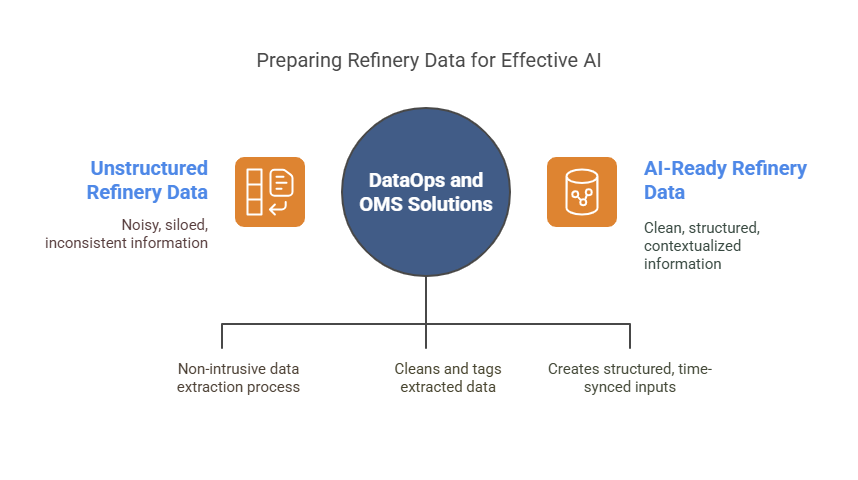
  • AI thrives on clean, contextualized data. Without structured and reliable inputs, even the most advanced models produce unreliable results.
  • Most refinery data is unstructured or isolated. SCADA systems and historians generate large volumes of data, but it’s often poorly labeled or difficult to access in real time.
  • Bridging the gap starts with integration. Making this data usable requires a combination of cleaning, tagging, and synchronization with operational timelines.

Solutions in the Industry

  • Platforms like Cognite’s DataOps demonstrate how industrial data, often noisy and unlabelled, can be contextualized, structured, and integrated to accelerate AI deployment.
  • Likewise, Microsoft’s Energy Data Services provides a scalable architecture that layers structured access on top of SCADA and historian data, creating a unified view for AI applications.

Unlocking AI in refineries starts with AI-ready data. OMS’s historian-tap architecture extracts, cleans, and tags data non-intrusively, delivering structured, time-synced inputs for reliable ML insights. This enables legacy plants to adopt AI safely and efficiently—without disrupting control systems or requiring costly infrastructure changes.

Conclusion

In today’s volatile energy landscape, refineries can no longer afford to overlook offsite operations. From blending and storage to logistics and forecasting, these areas significantly influence product quality, emissions, and profitability. AI offers a powerful way forward—enabling real-time insights, predictive monitoring, and smarter decision-making. By addressing challenges such as data fragmentation and legacy systems, refineries can unlock transformative value. OMS’s AI-driven solutions are designed to help refineries modernize without disruption, ensuring safer, more efficient, and resilient operations. As the industry evolves, embracing AI isn’t just strategic—it’s essential for long-term success and competitiveness in the global energy market.

The refining industry is changing fast. With automation in refining, AI, and digital twin technologies gaining traction, operations are becoming more efficient, cost-effective, and data-driven. But along with these advancements comes a major challenge: the growing refining skills gap. As new tools and technologies redefine workflows, there’s an urgent need for targeted training and upskilling in the refining industry to ensure professionals and organizations can keep pace and remain competitive.

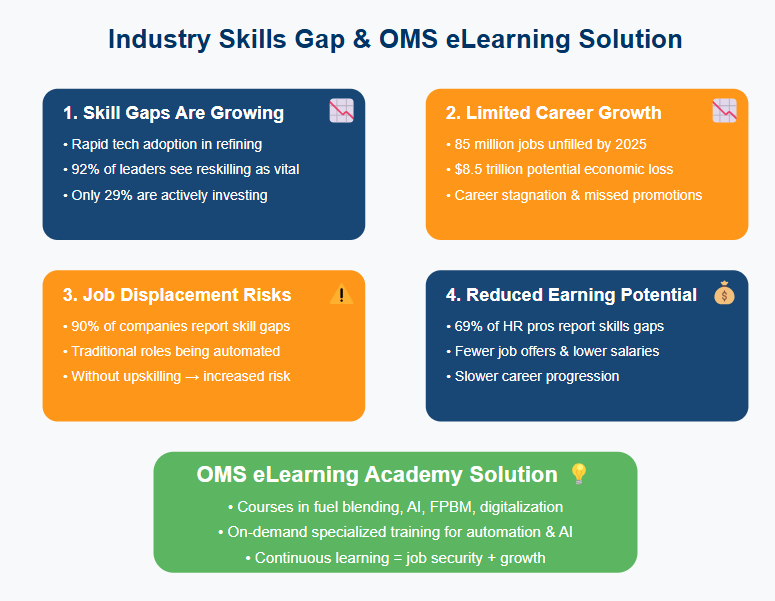
A recent survey by Ernst & Young found that while over 92% of energy leaders see reskilling as a competitive edge, only 29% are investing in it. This gap is not just a concern; it’s a pressing issue. Without the right skills, professionals risk falling behind, and companies may struggle with inefficiencies, stalled innovation, and lost market share. The time to act is now.

It’s not just about learning new tools—it’s about building a workforce that can work across disciplines, adapt to change, and embrace the industry’s evolving nature. That’s a tall order in a field traditionally built on legacy systems and well-established routines.

OMS eLearning Academy is a key player in addressing these challenges. Built specifically for the downstream refining sector, OMS offers flexible, high-quality online courses designed to meet the industry’s actual needs. The Academy makes continuous learning more accessible, practical, and aligned with companies’ needs — from core technical skills to emerging technologies. It’s not just about learning new tools; it’s about building a workforce that can adapt to change and embrace the industry’s evolving nature.

With its focus on Empowerment and Access, OMS isn’t just delivering training—it’s helping shape a more future-ready workforce for refining. Whether you’re a company looking to stay competitive or a professional aiming to stay relevant, now’s the time to upskill and move forward.

Why the Refining Skills Gap Is a Growing Concern

Automation in Refining Is Redefining Job Roles

The refining industry is moving fast, and professionals who aren’t keeping their technical and digital skills up to date are starting to feel the impact. As operations become more data-driven and automated, traditional work methods no longer cut it.

According to Edstellar, by 2026, an estimated 85 million jobs could go unfilled due to skill gaps, potentially costing the global economy $8.5 trillion. In refining, that translates to real risks—from career stagnation to missed promotions and even job displacement. The message is clear: the time to upskill is now, especially as technologies like AI, automation, and digital twins take center stage.

We’re already seeing it: Outdated process control methods, limited data analysis skills, and a lack of familiarity with emerging tools are holding professionals back.

That’s why OMS eLearning Academy is stepping in. We’re helping the downstream refining sector close these gaps with targeted, flexible, and industry-specific training. Our courses are designed around the real-world skills companies need — fuel-blending optimization, AI-powered decision-making, analyzer-less process automation (FPBM), and hybrid model digitalization.

With customizable learning paths and anytime access, OMS makes it easy for professionals and teams to upskill on their terms — and stay ahead as the industry continues to evolve.

The message is clear: evolve with the industry—or be left behind.

AI and Digital Twin Technologies Require New Skills

AI and automation are changing the game in the energy industry — and fast. Traditional roles are evolving, and advanced systems now handle many tasks that once defined refinery operations. According to a McKinsey survey, nearly 90% of companies already deal with skill gaps or expect to face them in the next few years. For professionals, that means one thing: adapt or risk being left behind.

At OMS eLearning Academy, we’re helping refining and downstream professionals stay ahead of the curve. Our on-demand, industry-specific courses are designed to build the skills that matter most right now, including:

  • FPBM hybrid modeling
  • AI-driven process optimization
  • Automation and digitalization technologies

Whether you’re looking to grow in your role or prepare for what’s next, OMS offers flexible, high-impact training built for the realities of modern refinery operations. It’s all about staying competitive, staying relevant — and staying ready. The industry is moving fast, and it’s up to you to keep up.

Explore the courses at www.oms-eLearning-academy.com and start learning today.

The Need for Targeted Training and Continuous Upskilling

As automation, AI, and globalization continue to reshape today’s workforce, professionals with outdated skills find it harder to stay competitive. Forbes reports that 69% of HR professionals now say their organizations face a skills gap—a significant jump from 55% just a few years ago.

For individuals, this gap can mean fewer job opportunities, lower salaries, and being passed over for promotions. Industries like tech, manufacturing, and energy are evolving fast, and those who don’t keep up risk falling behind.

The takeaway? In today’s landscape, staying current with technical and soft skills isn’t just a nice-to-have—it’s essential for long-term career growth and security.

How the Refining Skills Gap Affects Workforce Readiness

Career Stagnation Due to Outdated Technical Skills

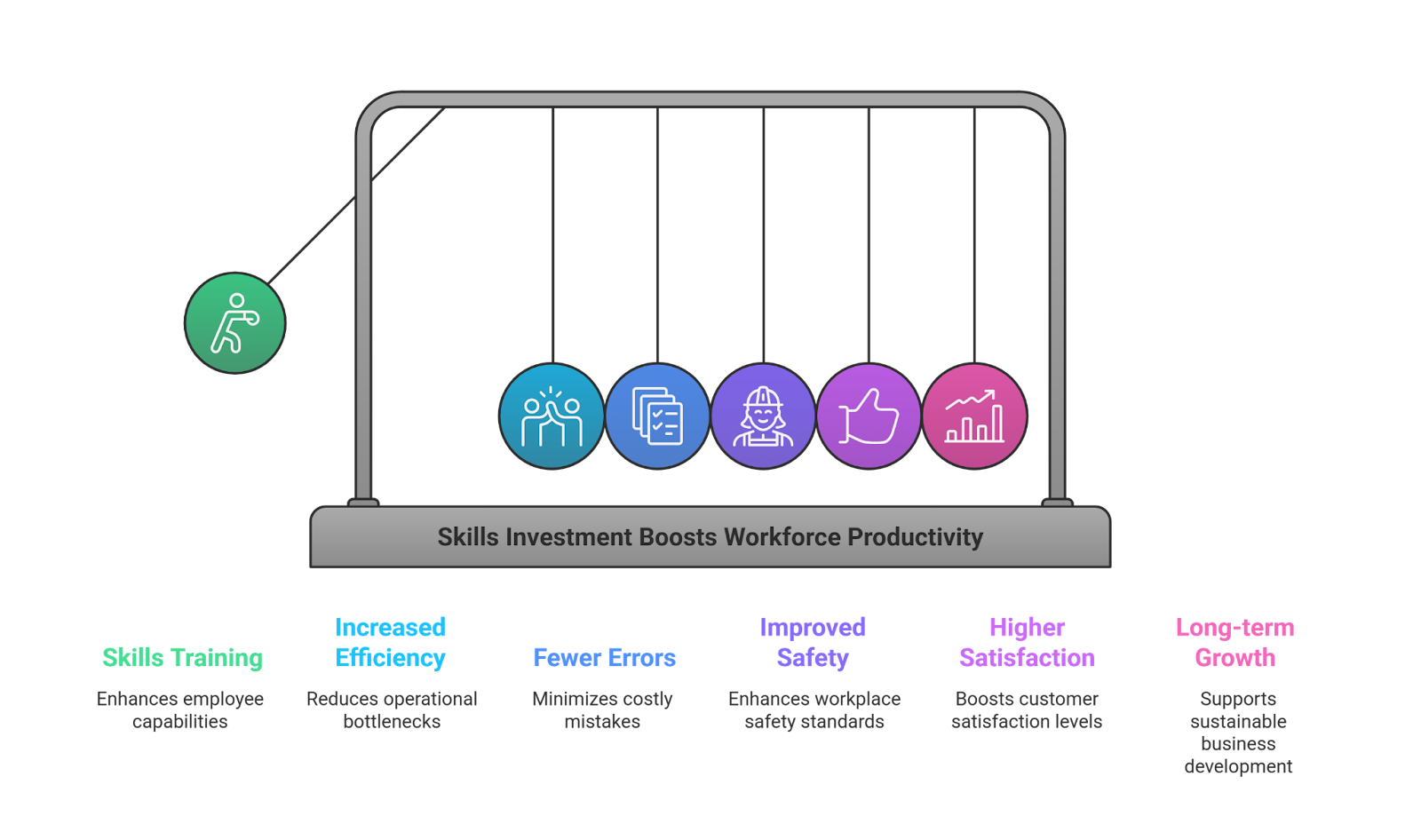
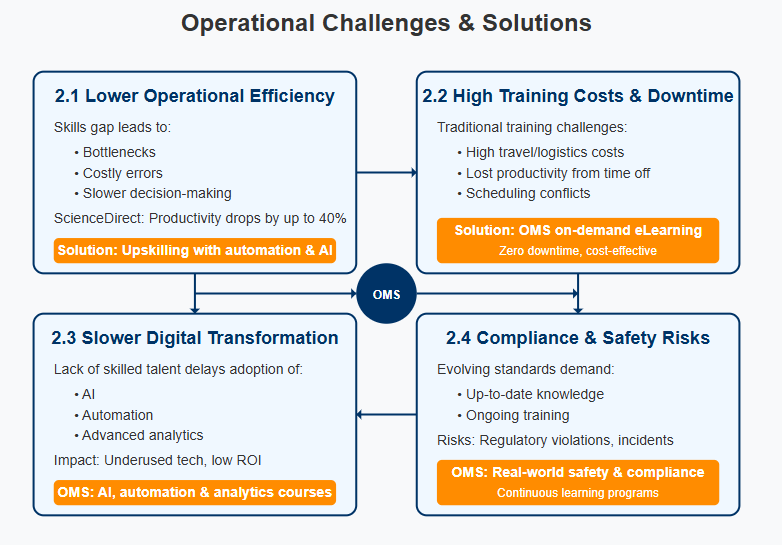
In today’s Industry 4.0 environment, lacking skilled talent isn’t just a workforce challenge—it’s a real threat to productivity and performance. ScienceDirect reports that companies facing significant skills gaps can see productivity drop by as much as 40%, thanks to inefficiencies, costly errors, and project delays.

As automation, AI, and digital tools become standard, employees not equipped to work with these technologies often slow operations, create bottlenecks, and increase the risk of mistakes in high-stakes industries like refining and manufacturing that can directly impact safety, timelines, and customer satisfaction.

To stay competitive, companies must prioritize reskilling and upskilling efforts that align workforce capabilities with emerging technologies. Empowering employees with the right skills minimizes errors, improves efficiency, and supports smoother operations and long-term growth in a digital-first economy.

The path forward is clear: invest in skills today to build a more agile, capable workforce for tomorrow.

Increased Job Displacement from Automation and AI

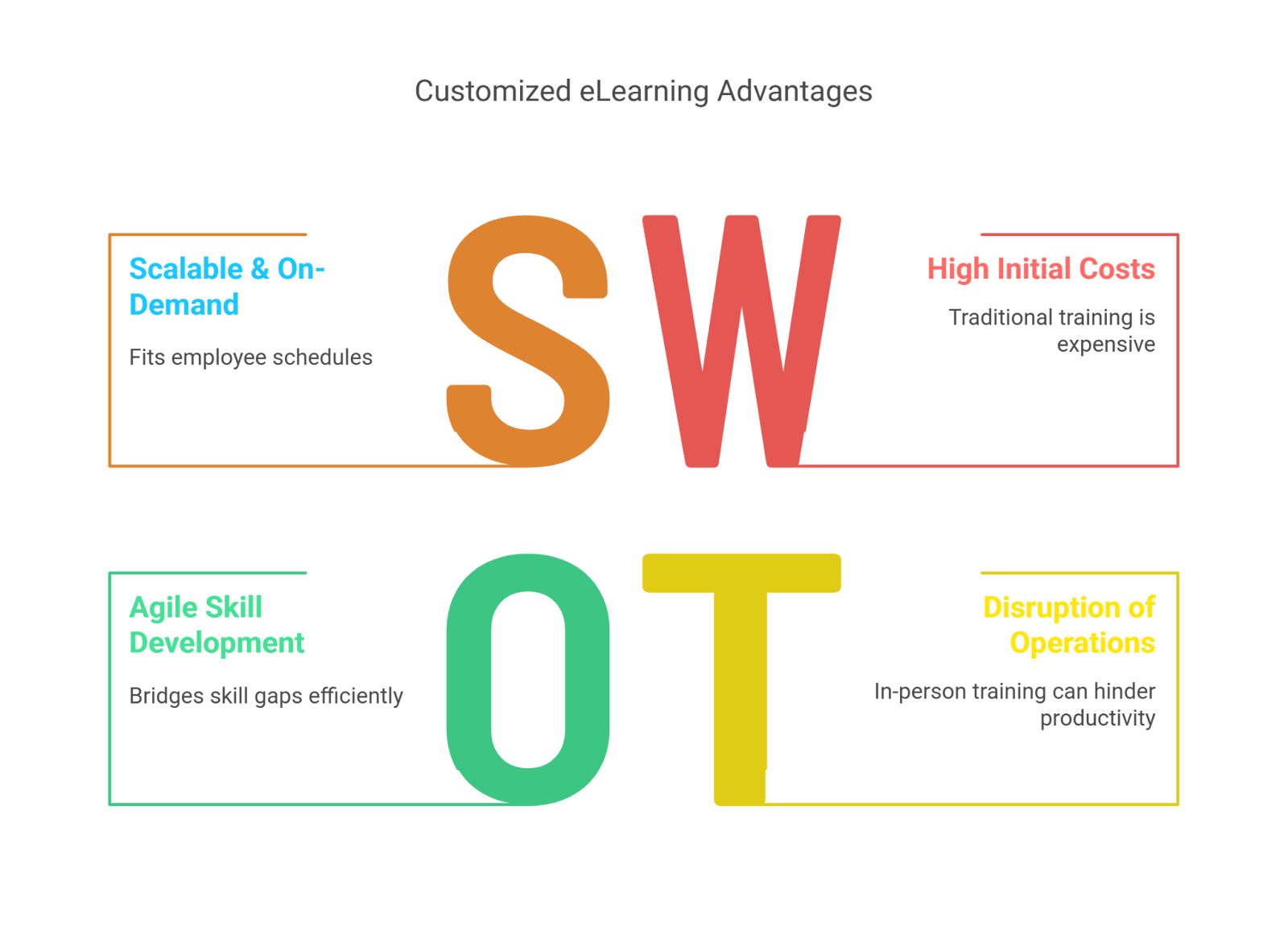
Traditional training often comes with a hefty price tag—think travel, venue costs, and time away from work. Scheduling conflicts and pulling teams off the floor for in-person sessions can disrupt operations and strain productivity. It’s a system that’s harder to justify in today’s fast-paced environment.

That’s where customized eLearning makes all the difference. According to the World Economic Forum and the eLearning Industry, digital learning platforms are a more innovative, agile way to bridge skill gaps and prepare teams for future demands without halting daily operations.

OMS delivers scalable, on-demand eLearning that fits into employees’ schedules, reduces downtime, and keeps your workforce future-ready.

Lower Earning Potential Without Upskilling in Refining

One of the biggest roadblocks to adopting new technologies like AI, automation, and data analytics is the insufficient skilled people to make it happen. Without the right expertise, even the most promising tools can go underused—stalling innovation and lowering returns on investment.

The Training Industry highlights that modern eLearning trends, like AI-powered personalization and adaptive learning platforms, are key to closing these gaps. They don’t just teach—they engage and build agile, future-ready teams.

With targeted courses in AI-driven optimization, automation, and data analytics, OMS helps professionals keep pace and gives companies the talent edge to lead transformation.

The Risk of Falling Behind in a Competitive Industry

Continuous learning isn’t just a nice-to-have—it’s essential for maintaining safety and meeting regulatory requirements in fast-changing industries. As technologies evolve and standards tighten, staying current with protocols and best practices helps reduce risk and keep operations running smoothly.

Creating a culture of ongoing learning means compliance becomes second nature. It helps teams avoid costly missteps and ensures that safety isn’t compromised. ELearning Industry highlights that continuous development empowers employees to stay sharp, adaptable, and informed.

OMS supports this with training programs built to reinforce safety, meet regulatory demands, and keep teams confidently prepared for whatever comes next.

Closing the Refining Skills Gap with Targeted Training Solutions

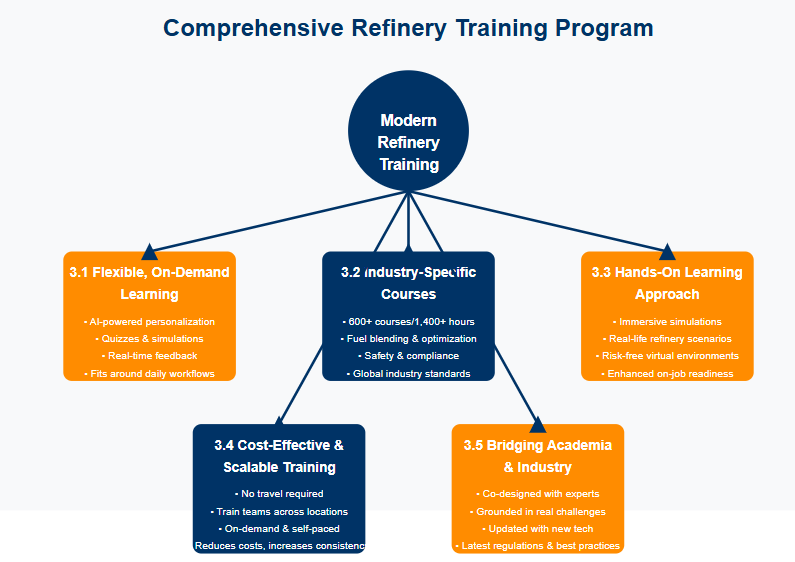
Flexible, On-Demand Learning for Refinery Professionals

As remote and hybrid work become the new normal, one thing is clear: Professionals need training that works around their schedules, not the other way around. That’s where generative AI makes a real difference. It delivers personalized, on-demand learning that fits each individual’s pace, preferences, and progress.

Interactive modules—like quizzes, simulations, and instant feedback—keep the experience engaging, no matter where someone works. The best part? They don’t interrupt daily workflows, making continuous learning natural and manageable.

So here’s a question: Is your current training setup flexible enough to support a modern, distributed workforce?

Refining-Specific Courses That Address Real-World Needs

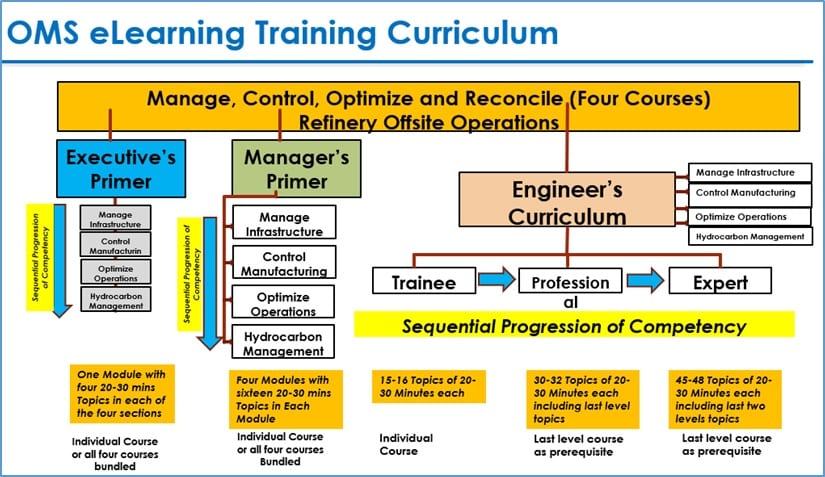
 Looking to build deep, industry-relevant skills without stepping away from the job? OMS has you covered. With a library of over 600 refining-focused courses and 1,400+ hours of expert-validated content, our eLearning Academy is designed specifically for engineers, operators, and managers working in the downstream sector.

From fuel blending and process optimization to safety standards and environmental compliance, the curriculum covers the basics and the advanced—aligned with global industry standards. You choose the topic, and you learn at your own pace.

How do you keep your skills sharp in such a fast-changing industry? OMS gives you the tools to stay current, compliant, and ahead of the curve—on your schedule.

Simulation-Based Training for On-the-Job Application

How do you turn theory into real-world results? At OMS, learning should go beyond watching videos or reading slides. Our training integrates interactive simulations, case studies, and real-life refining scenarios to bring concepts to life.

You’ll face virtual challenges modeled after actual plant operations—making critical decisions, troubleshooting issues, and applying skills in a risk-free environment. This hands-on approach doesn’t just help you understand the material—it helps you retain and use it where it matters most: on the job.

Want to boost on-the-ground performance while learning? OMS’s experiential training ensures that you’re ready to apply what you learn from day one.

Scalable and Cost-Effective Workforce Development

Looking to train more people without stretching your budget or disrupting operations? That’s where OMS comes in.

Our eLearning solutions are designed to be both cost-effective and scalable, making it easy for companies to upskill large teams—no travel, no scheduling headaches, and no repeated instructor sessions. With courses on demand, professionals can learn at their own pace, wherever they are, and without stepping away from critical day-to-day work.

How do I get consistent training across a global workforce without the usual logistical barriers? OMS makes investing in your people simple, efficient, and impactful without compromising productivity.

Bridging the Gap Between Academic Theory and Refining Practice

How do you ensure training isn’t just theory but something your team can use on the job?

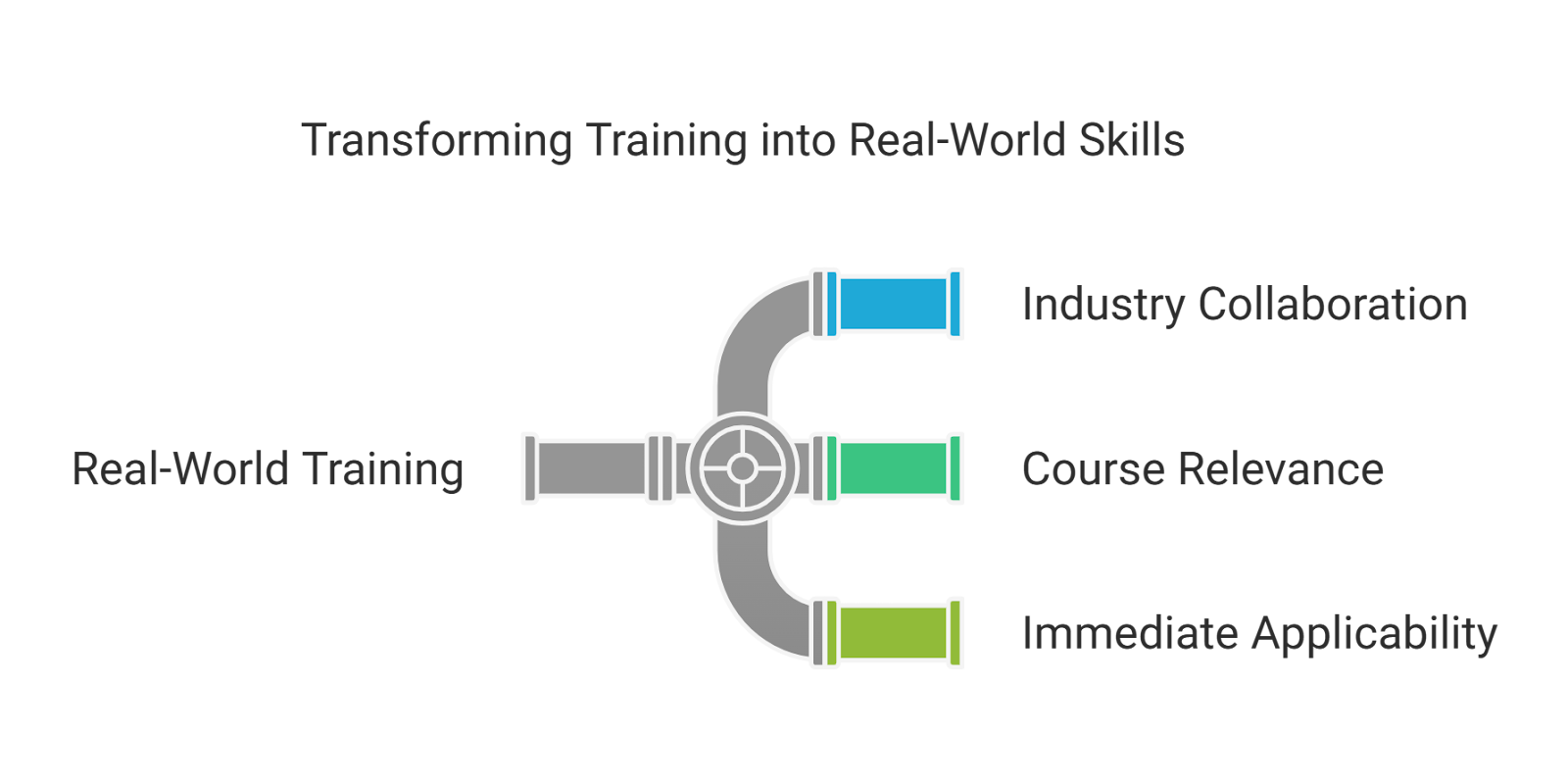
OMS tackles that head-on by working with industry experts, engineers, and thought leaders to design every course. That means the content isn’t just based on academic concepts—it’s grounded in real-world refining challenges, technologies, and best practices.

Because we stay closely connected to what’s happening in the field, our courses are regularly updated to reflect the latest innovations and compliance standards. The result? Relevant and immediately applicable training gives your team the confidence and capability to perform from day one.

Conclusion: The Time to Upskill Is Now

The refining industry is undergoing rapid transformation driven by digitalization, automation, and sustainability goals. Professionals who actively pursue skill development will shape the future—those who don’t risk falling behind. OMS eLearning Academy stands at the forefront of this evolution, equipping individuals and organizations with the targeted, practical knowledge needed to adapt and excel in today’s competitive environment.

Don’t wait for change to force your hand—take control of your career growth. Upskill today with OMS eLearning Academy and lead the way in the future of refining.

Oil price volatility is a reality that every refinery faces. One day, prices soar due to geopolitical tensions, and the next, they plummet because of shifting demand. How do refineries keep up?

The stakes are high—margins tighten, operational costs fluctuate, and regulations evolve. Yet, one thing remains constant: the need for efficiency. At Offsite Management Systems LLC (OMS), we work closely with refineries to navigate these challenges with innovative automation solutions. Whether optimizing fuel blending, integrating AI for predictive maintenance, or enhancing operational efficiency, automation is no longer a luxury—it’s a necessity.

But where should refineries start? This blog discusses the impact of oil price fluctuations and how automation can transform refining operations for long-term resilience.

Understanding Oil Price Volatility

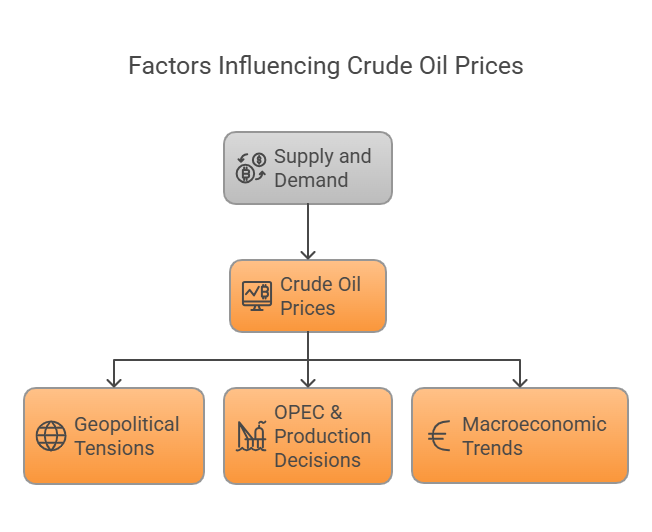
Oil prices are influenced by multiple factors, including:

  • Supply and Demand: Shifts in production and consumption impact crude oil prices. (Investopedia)
  • Geopolitical Tensions: Conflicts, trade sanctions, and instability in oil-producing regions create uncertainty.
  • OPEC & Production Decisions: The Organization of the Petroleum Exporting Countries (OPEC) plays a crucial role in setting production quotas, affecting supply levels, and price stability (Ashling Partners).
  • Macroeconomic Trends: Inflation, interest rates, and economic slowdowns affect oil demand and pricing.

For an in-depth understanding of these factors, refer to Oil Price Analysis: The Impact of Supply and Demand.

Challenges Faced by Refineries Due to Oil Price Volatility

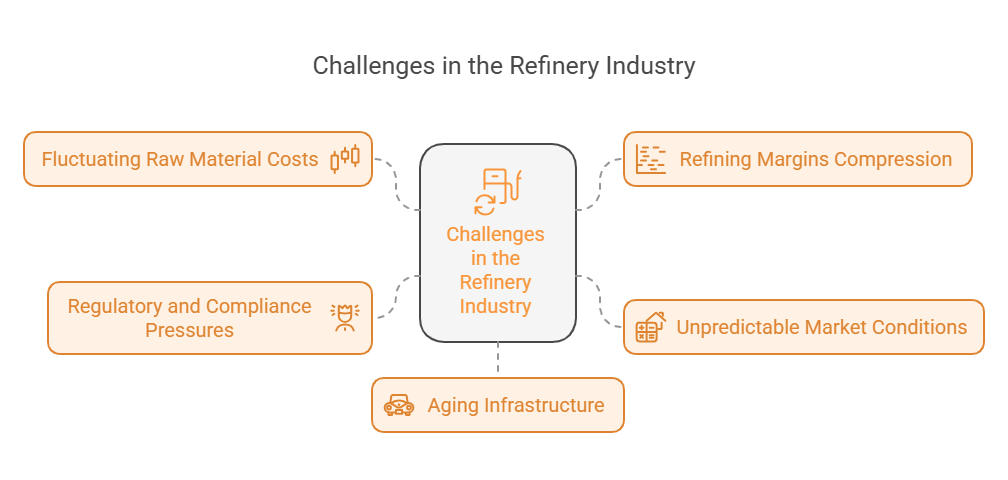
Oil price fluctuations directly impact refinery operations in several ways:

  1. Fluctuating Raw Material Costs: Since crude oil is the primary feedstock for refineries, price swings significantly affect operating expenses.
  2. Refining Margins Compression: When crude oil prices spike, refineries may struggle to maintain profitability unless they optimize production.
  3. Unpredictable Market Conditions: Volatile pricing makes long-term planning and investment decisions challenging.
  4. Regulatory and Compliance Pressures: Governments impose strict environmental and safety regulations that require continuous monitoring and adaptation (Ashling Partners).
  5. Aging Infrastructure: Many refineries operate with outdated equipment, making them less adaptable to changing market dynamics.

So, what’s the solution? Automation. But not just any automation—strategic, refinery-specific automation. That’s where OMS comes in.

The Role of Automation in Refinery Operations

Automation technologies can help refineries navigate price volatility and remain competitive. Here’s how:

1. Process Optimization with AI & ML

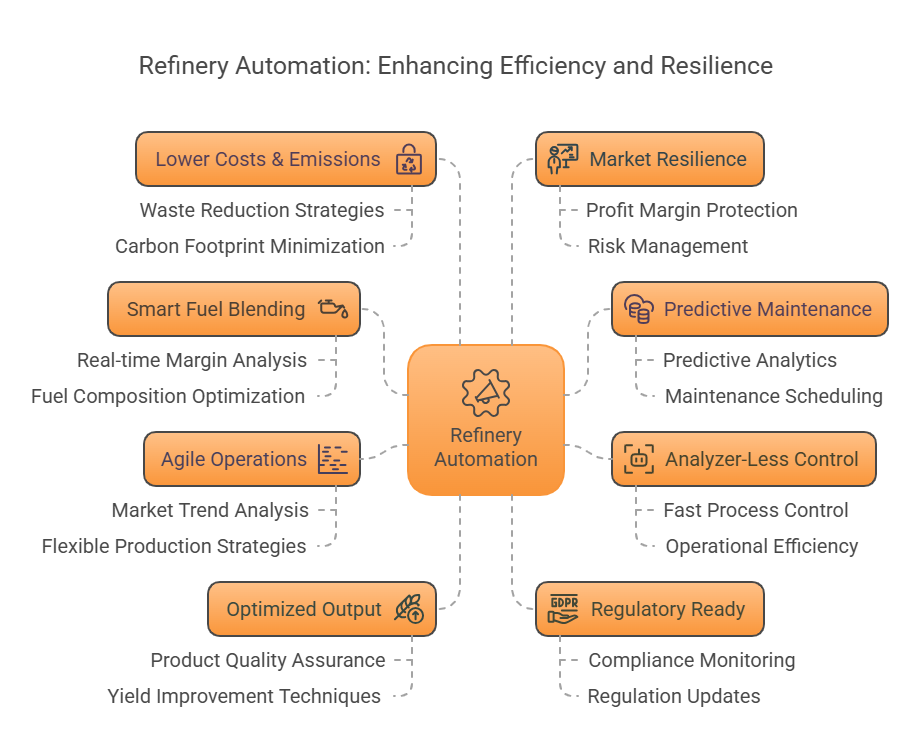
Integrating AI and ML in refinery automation has transformed how refineries manage operations. These technologies process vast amounts of real-time data, enabling predictive analytics, process optimization, and proactive decision-making. AI-driven systems improve refinery efficiency by enhancing forecasting capabilities, feedstock blending, and predictive maintenance. By leveraging AI and ML, refineries can minimize downtime, reduce costs, and maximize output quality, improving adaptability to oil price fluctuations. Advanced AI and ML algorithms analyze real-time data to optimize refinery operations, leading to:

  • Better Forecasting: AI-driven predictive analytics help anticipate price fluctuations and adjust refining schedules accordingly (Investopedia).
  • Efficient Feedstock Blending: AI enhances fuel blending, ensuring optimal product quality while minimizing costs.
  • Reduction in Downtime: AI-based predictive maintenance prevents unexpected equipment failures, reducing operational disruptions.

At OMS, we develop custom AI models for feedstock blending, process control, and forecasting, ensuring that refineries:

Optimize fuel blending while maintaining strict quality standards.
Prevent unexpected failures with predictive maintenance.
Adjust production schedules based on real-time market conditions.

A detailed discussion on AI in refining can be found at The Role of Automation in the Future of Energy for Oil & Gas.

2. Robotic Process Automation (RPA) for Back-Office Efficiency

Robotic Process Automation (RPA) is crucial in streamlining refinery back-office operations, reducing human error, and increasing efficiency. Refineries can improve operational speed and accuracy by automating repetitive tasks such as invoice processing, procurement, and regulatory reporting. With fewer manual processes, companies can allocate resources more effectively, ensuring that critical logistical and compliance-related tasks are handled with precision and minimal disruption, even in the face of volatile oil prices. RPA automates repetitive and time-consuming tasks such as:

  • Invoice Processing and Procurement: Automating purchase orders and supplier contracts reduces costs.
  • Regulatory Compliance and Reporting: Bots ensure accurate reporting and compliance with government regulations.
  • Supply Chain Management: Automating logistics and tracking enhances inventory management, reducing waste.

At OMS, we help refineries integrate RPA into their existing workflows, ensuring smoother operations and cost-effective resource allocation.

3. Industrial IoT (IIoT) for Real-Time Monitoring

Adopting Industrial IoT (IIoT) in refineries redefines efficiency, safety, and performance monitoring. Refineries can track and analyze real-time operational data by integrating sensors and connected devices, improving decision-making and maintenance strategies. IIoT enhances safety by automating leak detection, enabling predictive maintenance, and optimizing energy consumption. This real-time oversight minimizes operational disruptions, reducing costs and ensuring that refineries adapt efficiently to fluctuating crude oil prices and market uncertainties. IIoT integrates sensors and connected devices to collect and analyze operational data. Benefits include:

  • Improved Safety: Automated leak detection and monitoring enhance worker and environmental safety.
  • Energy Efficiency: Smart sensors adjust energy usage based on demand, cutting operational costs (Ashling Partners).
  • Predictive Maintenance: IIoT enables condition-based maintenance, reducing equipment failures and extending asset life.

At OMS, we help refineries integrate IIoT into existing systems, creating a smarter, safer, and more efficient operation.

4. Advanced Process Control (APC) for Precision Operations

Advanced Process Control (APC) is essential in refining operations, enhancing precision, efficiency, and consistency. APC systems utilize real-time data analytics to fine-tune processes, ensuring optimal production efficiency. Refineries can improve yields while maintaining consistent product quality and reducing energy consumption by dynamically adjusting variables such as temperature, pressure, and flow rates. With its ability to automate and refine critical operations, APC helps refineries stay competitive and resilient in a volatile oil market

APC ensures that every variable in a refinery—temperature, pressure, flow rates—is dynamically optimized. With OMS’s APC solutions, refineries can:

  • Optimized Production: Adjusting variables in real-time maximizes yield and efficiency.
  • Consistent Product Quality: Automation ensures adherence to strict product specifications.
  • Reduced Energy Consumption: Automated energy management minimizes waste and improves sustainability.

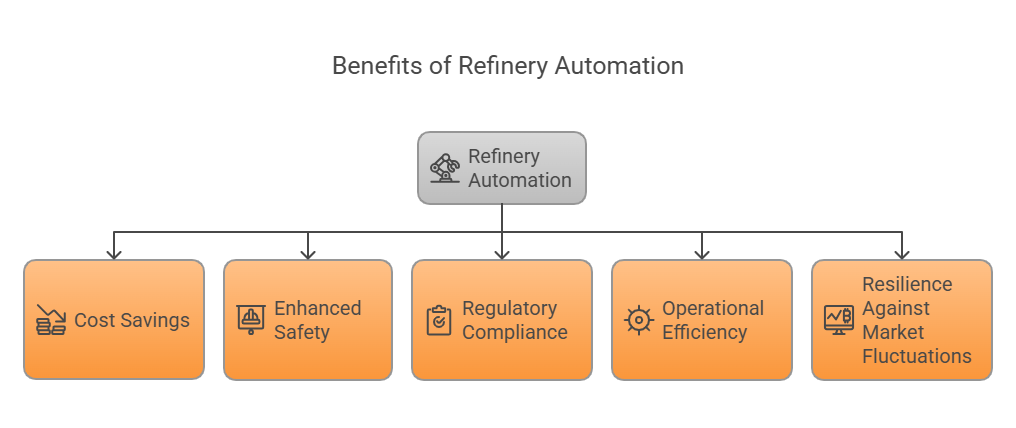
Benefits of Refinery Automation Amid Oil Price Volatility

  1. Cost Savings: Lower operational and maintenance costs improve profit margins.
  2. Enhanced Safety: Automation reduces human exposure to hazardous environments.
  3. Regulatory Compliance: Digital tracking ensures adherence to evolving industry standards.
  4. Operational Efficiency: AI-driven automation optimizes resource utilization and minimizes waste.
  5. Resilience Against Market Fluctuations: Data-driven decision-making enables refineries to adapt quickly to changing oil prices.

How Oil Price Volatility Drives the Need for Refinery Automation: The OMS Perspective

In an industry where oil price volatility remains a significant challenge, OMS is at the forefront of refinery automation, helping companies navigate market fluctuations with AI-driven fuel blending, ML-powered predictive maintenance, and analyzer-less hybrid models. By integrating FPBM hybrid modeling and intelligent process automation, OMS ensures that refineries can respond dynamically to crude price shifts, optimize production margins, and maintain regulatory compliance. As oil prices remain unpredictable, OMS’s solutions enable refineries to enhance efficiency, minimize operational costs, and reduce carbon emissions, making it a crucial player in shaping the future of energy sustainability. Through automation-driven innovation, OMS empowers refineries to achieve long-term stability and profitability despite fluctuating crude oil prices.

Refineries can thrive despite market uncertainty with OMS’s fuel-blending, predictive maintenance, and process control expertise.

Conclusion

Let’s face it—oil price volatility isn’t going away. But refineries don’t have to be at its mercy.

By implementing AI, ML, RPA, IIoT, and APC, refineries can take control of their operations, reduce costs, and enhance sustainability.

For additional insights, explore:

Embracing automation is no longer optional—it is essential for the future of refining in a volatile energy market.

Introduction

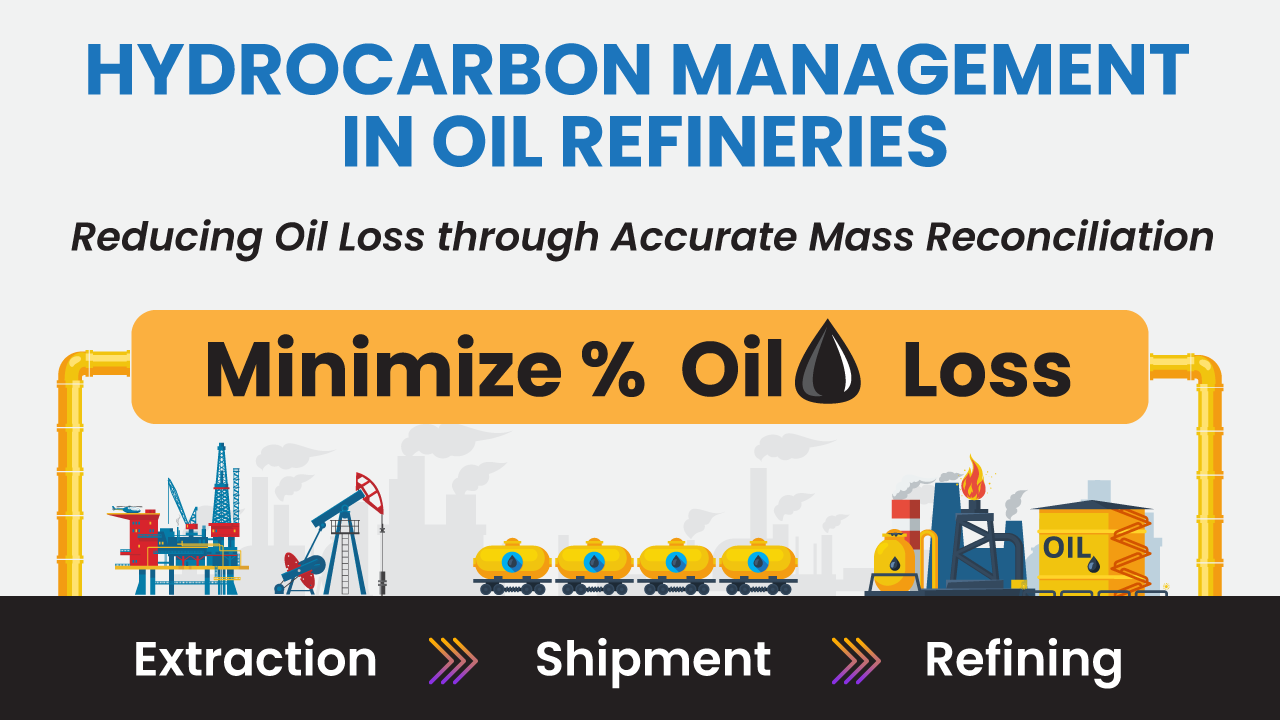
Hydrocarbon is an organic chemical compound that is extensively used as a fuel. Hydrocarbon Management (HM) refers to the various stages of extraction, shipment, refining, and it mainly aims to balance the input and output of the refinery. Hydrocarbon management is also known as mass reconciliation or mass balance.

This article discusses all aspects of hydrocarbon management in an oil refinery and outlines a methodology to minimize % oil loss by accounting for all losses and measurement calibration.

Elements of Hydrocarbon Management

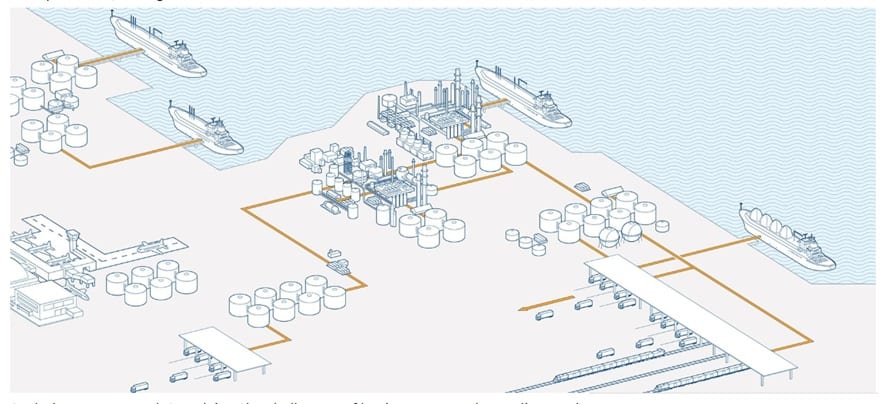
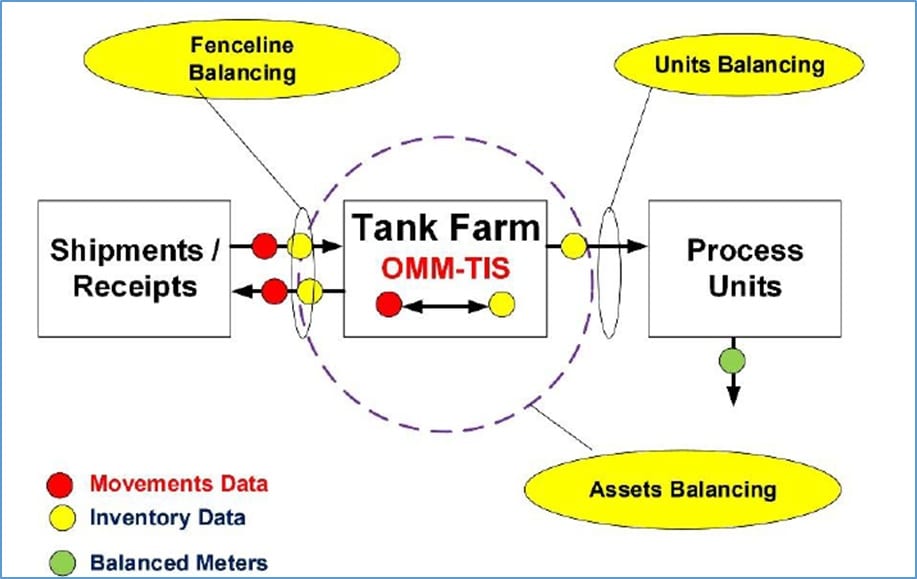
Considering Hydrocarbon management involves the receipts (tankers, pipelines, or any means of transportation), the refineries (the main process units that transform the raw materials to actual required product), the tank farm, and then finally, the shipments (tankers, pipelines or any means of transportation). Between the shipment and the receipts, there are two sections: tanks and the oil movements, where the transmissions occur with the help of custody transfer meters (high accuracy meters). It is referred to as fence-line balancing.

The tank farm consists of tank inventories and oil movement management. Assets balancing refer to the transfer of goods/stored items between the tanks. The next element is the process units which do the unit balancing and reconciliation of meters. The third important aspect of Hydrocarbon Management in a Refinery is unit balancing.

Hence, we can see that Hydrocarbon management has three major features for checks and balances, namely, fence-line balancing, assets balancing, and unit balancing.

Hydrocarbon Management or Mass Reconciliation Landscape

Figure 1. Hydrocarbon Management Landscape (ABB, 2019)

Essentials of Hydrocarbon Management or Mass Reconciliation

Figure 2. Essentials of Hydrocarbon Management

Importance of Meters Reconciliation

Let us learn what meters are in reconciliation and their importance, with an example. Initially, before manufacturing unit or production starts, refinery mass balancing takes place where characteristics of the crude oil are considered to obtain the specific output product from that crude. The unit LP optimization decides output productions, and meter information is not required at this stage.

Example of process unit

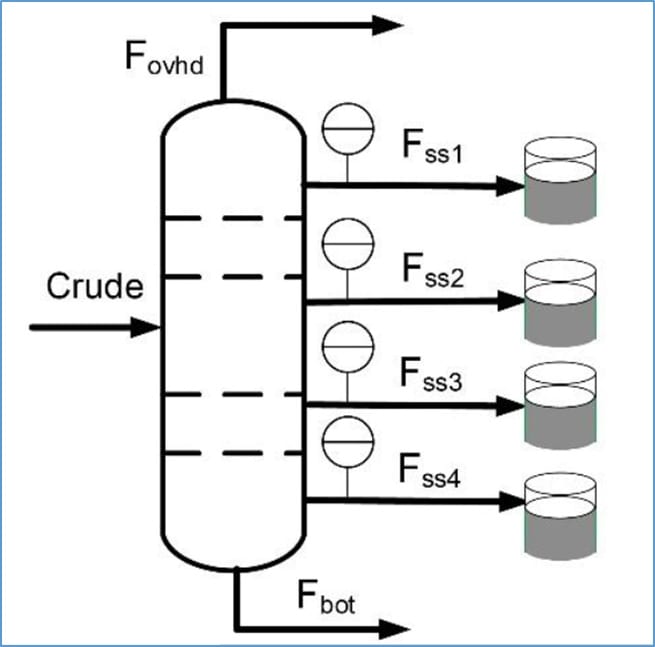
Now that the production process has begun, and consider the stream ‘Fss 1’, the point is set as 20 flow units. If the meter scale of readings is not calibrated right and there are high chances of wrong readings and reads 18 flow units instead of previously set 20 flow units.

Here comes a clash when the controller setpoint says 20 flow units and the unit operator wants to control the unit flow at 20, whereas the actual flow is not 20, and it reads 18 flow units. In this critical case, the controller tries to keep up its set value and push to the set value, i.e., 20, by reading 18. This causes an imbalance, and planning systems goes out of control. Here is where data reconciliation (DataRec) comes to resolve the problem. Data reconciliation (DataRec) monitors the tank level changes for the stream considered ‘Fss 1’ and calculates again.

It performs analyses on whether the meter should have read it as 20 or what can occur if found that it is 18 and corrects the wrongly calibrated meter readings accordingly. This process only corrects the wrong calibration but not in real-time. The meter must be taken out; recalibration must be performed and install again to avoid such misreading.

Meter Calibration leads to safer operation too

Thus, mass reconciliation is an important process that avoids unnecessary errors due to the wrong calibration of meters. Mass reconciliation is done by a yield accountant or analyst and is responsible for the wrong calibration of the meters. Once the production starts, it is hard to find the errors due to the uncalibrated meters, and it leads to massive errors, which is highly difficult to find out. And hence a refinery spends a million dollars in buying an efficient meter; construct the software application for the same to ensure the whole process of hydrocarbon management goes with high accuracy and high efficiency.

Significance of meters reconciliation

Figure. 3 Significance of meters reconciliation

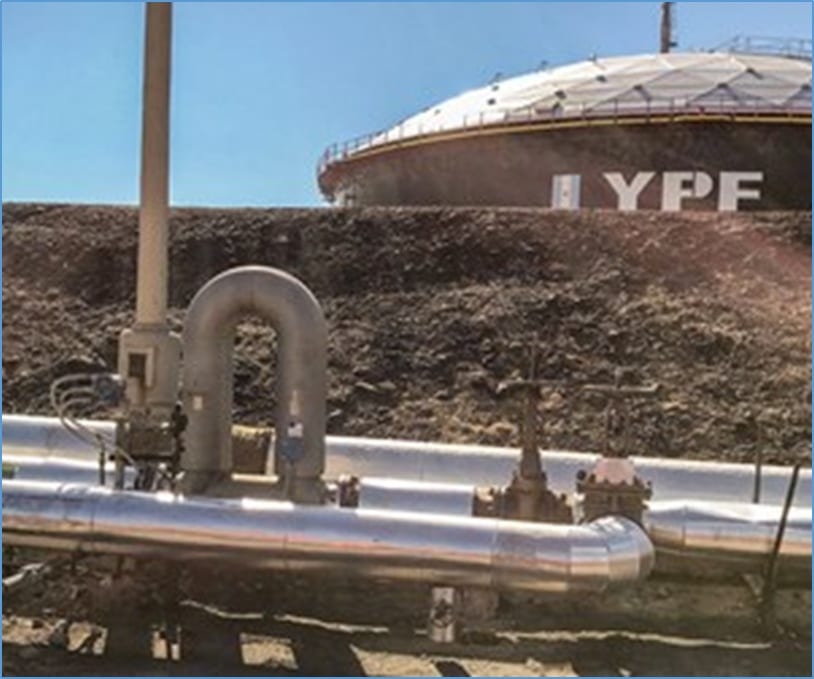
Coriolis meters located at the inlet to a crude tank

Figure. 4 Coriolis meters located at the inlet to a crude tank (Valentine, 2019)

A Refinery Balance Example

Between the receipts and shipments, are the tanks inventory and the unit balancing consisting of process units. Here is a perfect example to demonstrate the input and output of the refineries.

Input Side

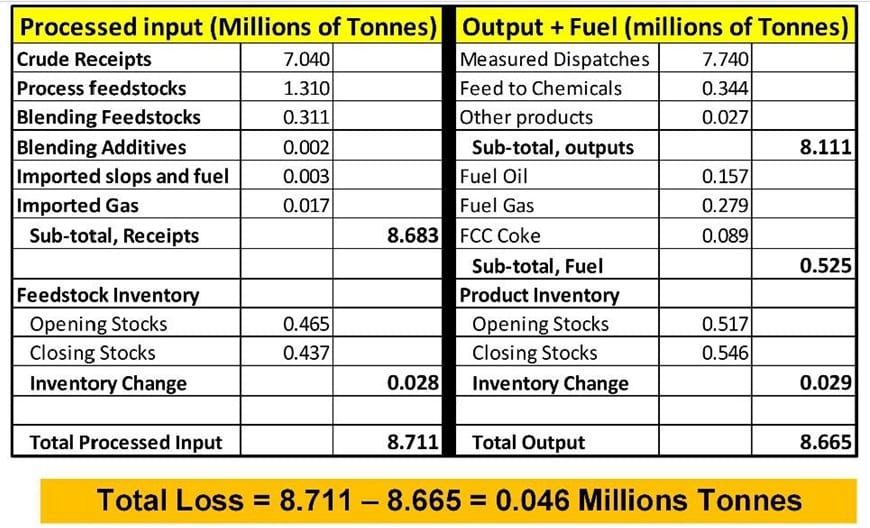
Let us consider we have 8.711 million tons of unprocessed raw materials for the production/process unit. Let us assume the receipt is crude oil, and this supply of unprocessed materials is bought from the concerned industries by the refinery. Combining feedstock, then the addition of various other additives, imported gas, slops, and the required fuels, everything comes to a subtotal of 8.683 million tons. The next stage of calculating total process input includes openings/closing stocks, inventory changes. This approximately is 8.711 million tons.

Output Side

On the output side, we have the main output products from the fence line. We also must consider the internal supply of FCC coke, gas, fuel oil to chemical units, and refineries. These are followed by openings/closing stocks which in turn change the inventory to 0.29, contributing to the total output is 8.665 million tons. We can visibly see the difference between the total process input and total processed output, which is 0.046 million tons. This is the actual calculation of the loss; that the refinery loses in a year.

Refinery balance examples

                        Figure. 5 Refinery balance examples

Refinery Loss Estimation

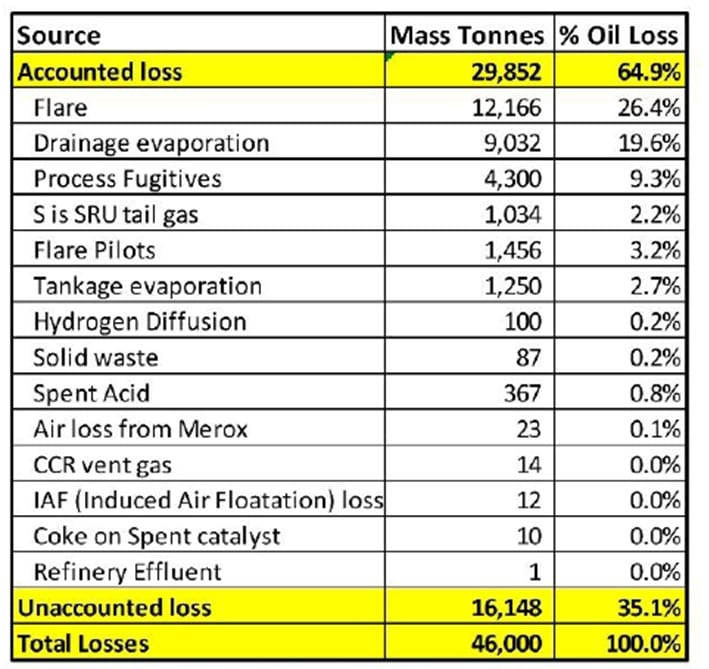
From the above explanation we can conclude there is surely a quiet amount of loses the refinery experiences every year. This loses can be classified into two types. They are accounted losses and unaccounted losses.

Accounted Losses

Accounted losses can be easily determined and estimated by a refinery. These losses include the amount of evaporation of gas to the atmosphere from the tanks, or rims, or pipelines; loss due to eruption or blow, solid waste, drainage wastes, loss due to diffusion, sulfur, and many more. Hence accounted losses are about 80 to 90% and contribute to about 64% of the total loss.

Unaccounted Losses

Unlike the accounted losses estimated, unaccounted losses cannot be determined exactly and contribute to about 35% of the total loss. Thus, as per the previous slide, forty-six thousand tons is the total loss (summation of accounted losses and unaccounted losses) incurred in a refinery.

Distribution of Refinery loss

Figure. 6 Distribution of Refinery loss

Credit and Debits in HM Landscape

Let us get to the core topic of ‘hydrocarbon management landscape’. Till now, discussion focused on how an imbalance occurs and how to resolve it. Yet refineries have their way of overcoming it. This might vary from one refinery to another, but the result is the same.

Credits and Debit Approach

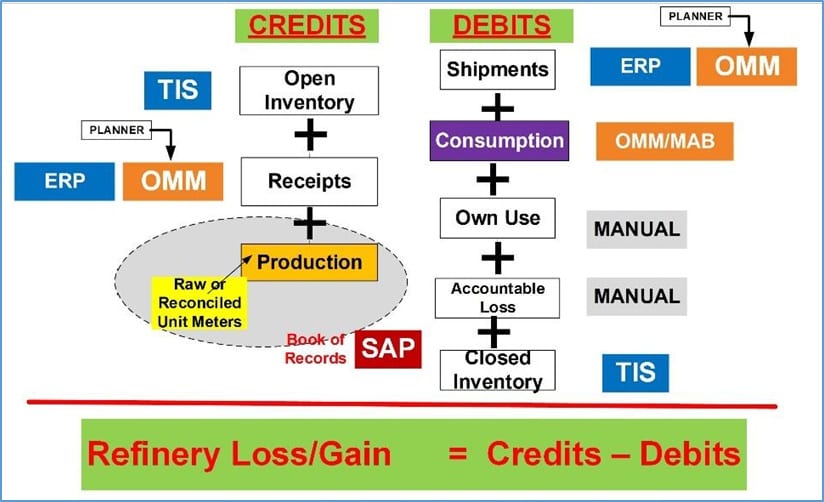
Credits Analyses

Analyzing the credit terms, we must consider the following:

  • Open inventory measured by a Tank Information System (TIS).
  • Crude receipt processed by oil movements system that is controlled by Order Movement Management (OMM).
  • Production unit, which consists of raw materials and meters reconciliation.

Credit and debit in context of Hydrocarbon Management

Figure. 7 Credit and debit in context of Hydrocarbon Management

The above-mentioned credits are all noted in the record book in ERP (Enterprise Resource Planning system) via SAP.

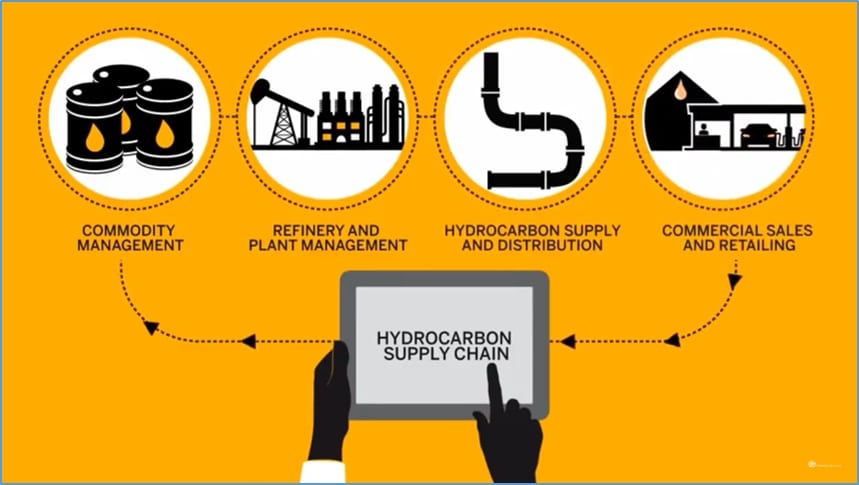
 SAP solution for Hydrocarbon supply chain

Figure. 8 SAP solution for Hydrocarbon supply chain (Emerging Alliance, 2019).

Debits Analyses

Analyzing the debit terms, we must consider the following:

  • Shipments coming from ERP system or OMM
  • Consumption by Order Movement Management (OMM) or Material Accounting Balance also known as MAB

Usage of internal things which comes under accounted loss is noted manually, and it comes under closed inventory which is coming from the tank Inventory System. So, arriving at the result of calculations, refinery loss and gain is a credit minus debit. This calculation is simple as we do in our day-to-day lives to balance our checkbooks.

Business Case for Improved HM

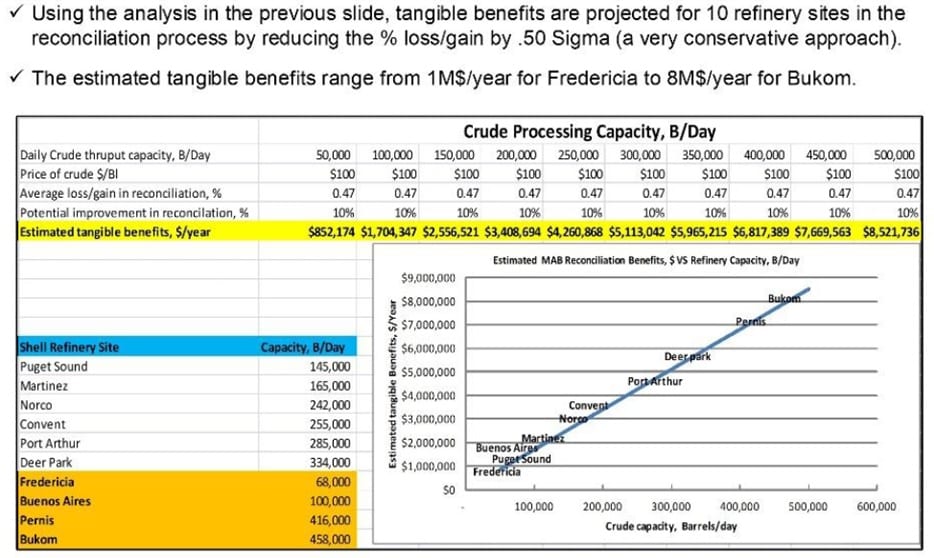
To understand the value of how much money is involved, let us consider an example of a corporation that owns 10 refineries. The values mentioned here are taken from the exact published data, which indicates the real capacity of the refinery. Let us assume that I have 100 dollars per barrel crude price, and the average total loss is calculated as 0.47. If the accuracy of the mass reconciliation software is increased by 10%, the value of the total loss is 0.047.

Case Study for the tangible benefits

Now we can imagine the amount of money the refineries profit depending on the capacity of 145 thousand barrels per day to 450 thousand barrels per day. They do profit with the increasing number of refineries and their capacity. Also, there is an approximate loss of one million dollars to eight million dollars per year for a refinery. If a corporation owns 10 refineries, the loss could be further increased to 25 – 30 million dollars per year. This demonstration is purely based on accurate measurements and accurate estimation of the mass reconciliation process.

Economics of Improved Hydrocarbon Management

Figure. 9 Economics of Improved Hydrocarbon Management

Continuing Education in Hydrocarbon Management or Mass Reconciliation

Refinery professionals responsible for Hydrocarbon Management or Mass Reconciliation must keep abreast with the latest methodology and system to help them reconcile. OMS eLearning Academy offers many online topics, structured courses extending up to 24 hrs of eLearning experience for professional levels. Click here to learn more about the OMS eLearning Academy and online courses in Hydrocarbon Management.

OMS eLearning Academy Architecture

Figure. 10 OMS eLearning Academy Architecture

Additional Resources

  1. https://www.oms-elearning-academy.com/white-paper/

References

  1. ABB. (2019). Oil, gas and petrochemical operations management software, https://new.abb.com/cpm/industry-specific-solutions/oil-and-gas
  2. Emerging Alliance. (2018). SAP Oil and Gas Hydrocarbon Supply, https://www.youtube.com/watch?v=Z7QZ81MwA9s
  3. Valentine, J. (2019). Case study for a high-performing refinery loss control program, https://www.hydrocarbonprocessing.com/magazine/2019/may-2019/process-optimization/case-study-for-a-high-performing-refinery-loss-control-program

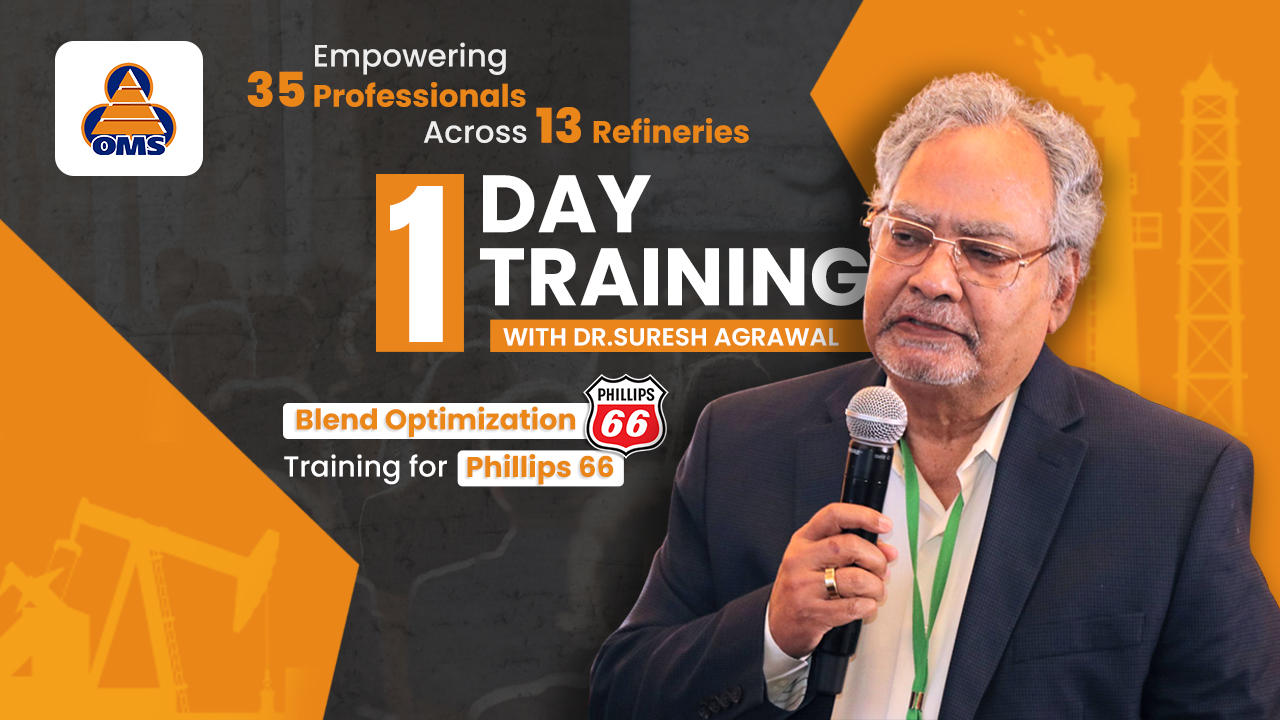
OMS eLearning Academy conducted a one-day training course on Blend Optimization for Phillips66 at their Houston corporate office.  35 professionals from Phillips’ 13 refineries attended the Blend Optimization training.  The attendees included blend engineers/scheduler, lab staff, planners, operational managers and Blend SME’s. The training was a grand success and was rated 4.6/5 by all attendees.

The training focused on the Blend Optimization methodology and how to minimize quality giveaways by using blend offline optimizer. The course started with an overview of MCOR (Manage, Control, Optimize and Reconcile), blend mathematical formulation using first principles and built on optimization algorithms and analysis of results. The course used a generic offline optimizer, which was fully functional for multi-blends, multi-periods blend planning, for live demo and demonstrated the use of marginal values analysis to convert from infeasibility to feasible blend optimized solution.

The Blend Optimization Training Topics were

  1. The Road Map to MCOR of Refinery Offsite Operations
  2. Blending Problems and Challenges
  3. The Quality giveaway – Concept, Cost and reduction Benefits
  4. Blending Definition and Formulation
  5. Blend Optimization
  6. Blend Models
  7. Methods to Handle Blend Non-linearity
  8. Regression and feedback of Blend Model Parameters
  9. Tanks Quality Analysis, Measurement and Prediction
  10. Bench marking of Fuels Blending System
  11. Overview of an offline Blending Optimizer System
  12. Demonstration of An Offline Blend Optimizer System
  13. Discussion of Results-Marginal Values Analysis
  14. Why Blending Projects fail?
  15. An overview of OMS eLearning Academy

The oil and gas training topics were very useful for professionals with less than 2 years’ experience and also served as review for more seasoned professionals. It was quite interactive course and attendees participated in the question and answers session at the end.  All attendees received a certificate of completion . As one of the suggestions from the attendees, OMS eLearning academy plans to make this course as one of the special eLearning curriculum in the near future.

Some of the testimonials from the attendees were as follows:

“Good addition to “F2F”. Thanks”

“Course contained a lot of foundation/basic information relative to my experience level. Seems to be a good course for people with less experience.”

“I liked how the challenges of blending were discussed and importance of understanding models and importance of blend header.”

“Overall, very useful course”

“Overall useful reminders probably best for < 2 years on the job”

“It would be nice to see how the P66 refineries were rated on the bench-marking system.”

“Good overview of everything. It was easy to understand as a new engineer.”

Your refinery operations deserve smarter automation

From tank farm control to hydrocarbon loss reduction, Global OMS delivers digital solutions trusted by refineries worldwide.